

Overview
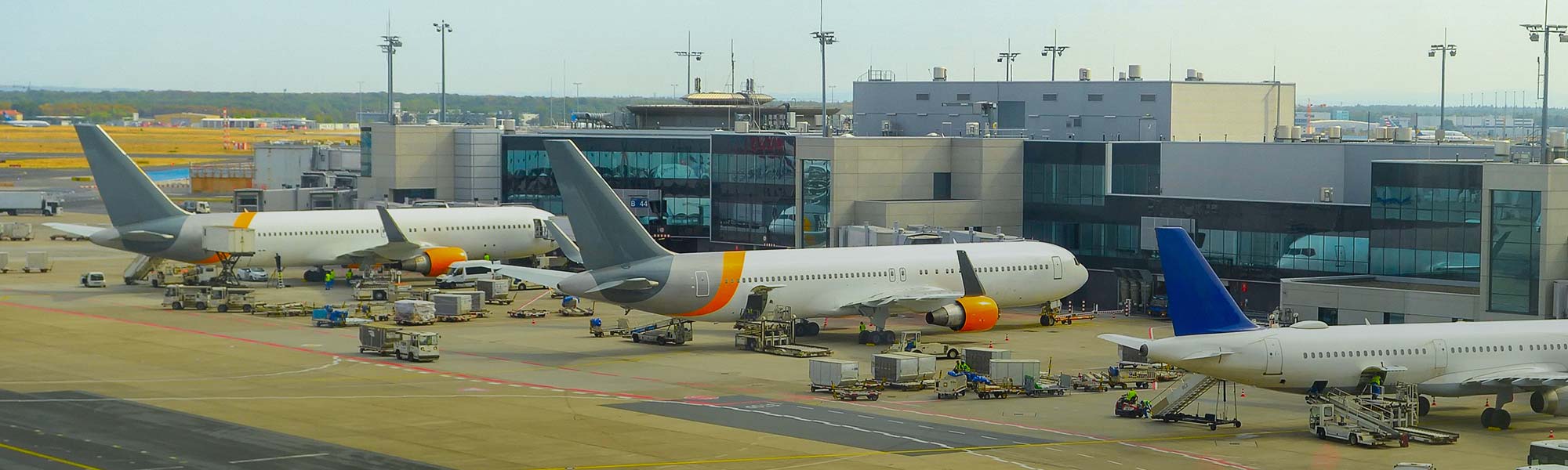
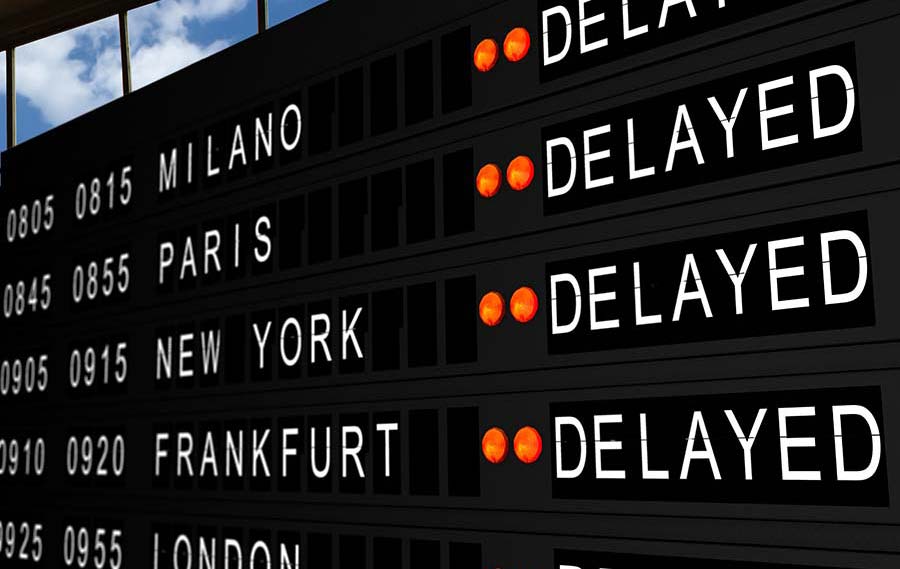
With travelers maxing out airport systems around the globe with excessive check-in times, huge luggage backlogs, and long boarding times that resulted in delayed flights, various automated systems have been in place to reduce human labor need and efficiently expedite flight boarding procedures.
 Flight delay
  Aircraft bridge operators
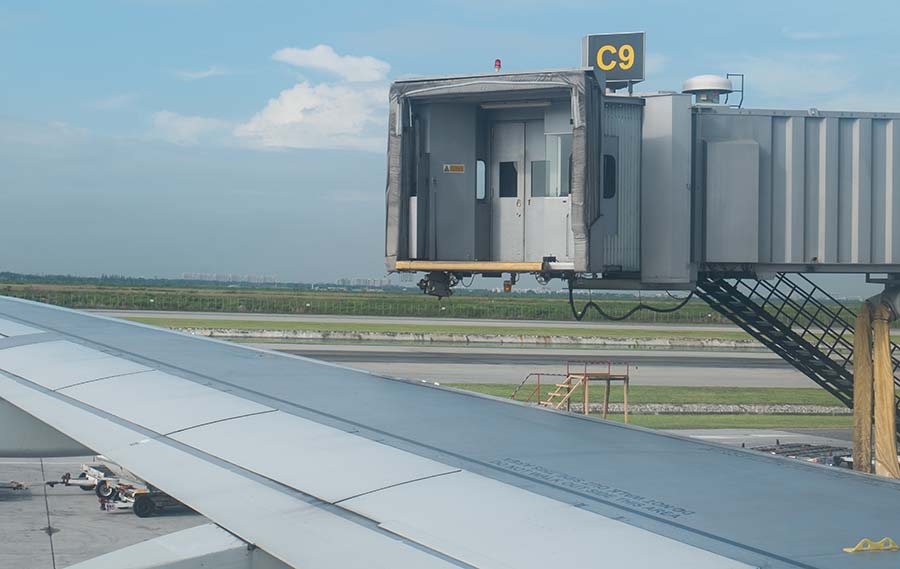
 While it's not always black and white, but the hidden cost of airport delays equates to approximately one million USD per hour, and about 87 billion per year for airport congestion (US economy). While many systems have been upgraded to handle check-ins and luggage delivery, the alignment of the aircraft's boarding bridge remains to be solved. Hence an automated bridging system has been developed by our system integrator. The automated system works much like a parking assistant with eyes on all airport docking statuses.
Once the aircraft docks into position, the automated bridge will align and connect to aircraft doors for passengers to embark/ disembark. There's no need to wait for ground technicians to manually maneuver the bridge into position, which may cause excessive delays.
Challenges
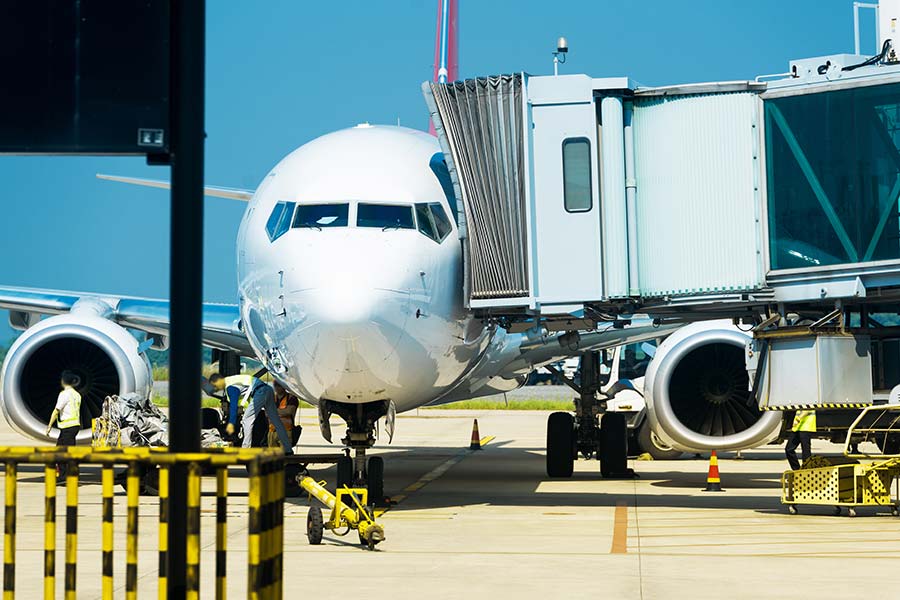
To overcome the excessive number of travelers, airports need to upgrade every aspect of their operations. To load passengers efficiently onto planes, airport network connected docking stations work in-sync to direct pilots/ aircrafts into position.
Once docked, the automated aircraft bridge system identifies the doors to the aircraft, approaches and makes connection automatically. The challenge of implementing this system is the fact that the system exposed to weather conditions, and the bridge acts very much like an extension tunnel that vibrates constantly when in action. The system would also require machine vision capabilities to identify the aircraft and its doors to make such connection.
Solution
Our solution partner integrated a Neousys rugged embedded system at the helm to oversee the automation. The Neousys system provided rich I/Os to connect to PoE and USB3 camera interfaces to optimize the machine vision component of the solution to locate the doors on each aircraft. Capable of operating between -25°C and 60°C, the system supports a GPU or professional inference accelerator for advance machine learning to identify and align aircraft doors for automatic bridge deployment and maneuver on airport tarmacs. Internal expansion wise, there are mini-PCIe and M.2 slots to accommodate WiFi 6, 5G, or 4G modules to communicate with the airport network system.
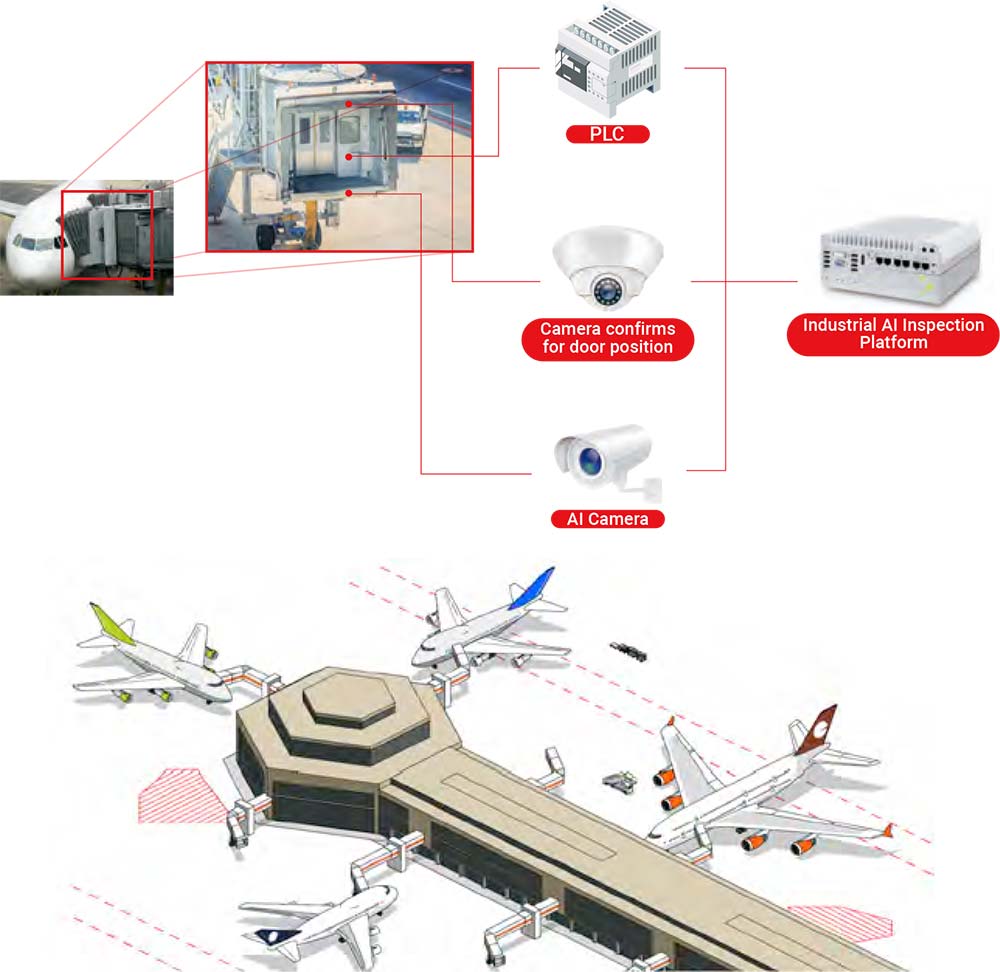
Once the aircraft is properly docked, communicated via the airport network system, the system scans for the aircraft door, and extends the automated bridge out to the aircraft for connection with minimum manual control or monitoring. Once connected, the aircraft crew double checks before letting passengers disembark the aircraft. The system allows automated bridge connections as soon as the aircraft is properly docked so passengers need not wait for ground crews running from gate to gate, manually conduct, maneuver, and connect the bridges.
- Learn more about Neousys Rugged Edge AI GPU Embedded Computer: https://www.neousys-tech.com/en/core-technologies/gpu-embedded-computing