Overview
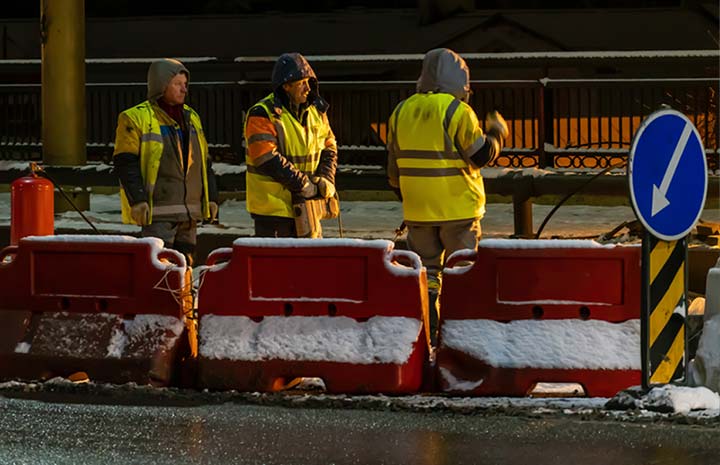
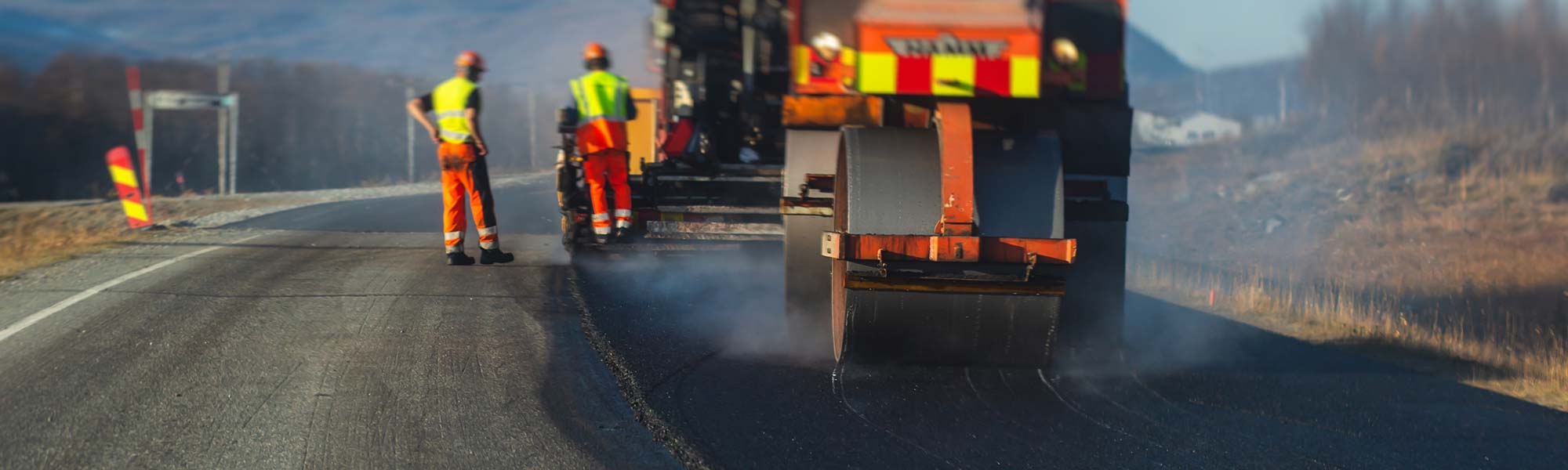
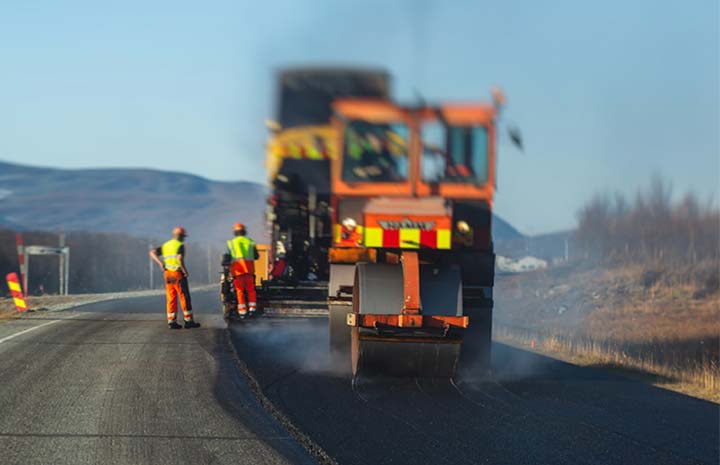
Temporary roadwork sites are prone to accidents due to passive protection means. Such as cordoning off the area with tapes/ cones, flashing beacons at the corners/ edges, and there are some cases where the site is not secured at all in anyway, continuing operation of the site, unable to properly seal off the area, or not labeled/ highlighted correctly to sign the oncoming traffic.
While the above mentioned methods do not act as active barriers, the onsite workers are nearly never placed directly in the equation for safety considerations. The most common prerequisite for onsite workers would be reflective clothing, shoes and a helmet. As the traffic may come from both directions, workers may have their backs facing the oncoming traffic without realizing danger is closing in.
To solve this issue, our client developed a system that can be deployed on a roadwork vehicle, and with cameras attached, it can identify oncoming vehicles and predict their trajectory. The ideal is to send a signal to the visionbased and auditory warning system on the clothes workers are wearing. The signal is based on that the vehicle(s) approaching have a trajectory that may be close to workers and they need to pay attention to, if they have already not.
Challenges
For such a system to be deployed in a roadwork vehicle,the system must withstand in-vehicle shock and vibration conditions, accept the truck's 12V voltage power supply, provide necessary connections for cameras, have the ability to expand 5G/ 4G to download or upload data, and utilize WiFi communication to send a signal to the visionbased warning system on workers.
Processing power wise, to promptly calculate vehicle traveling trajectories, it is estimated that the help from graphics processing units may be required, and this further complicates the deployment. As standard graphics card installation on a motherboard is held in-place by a simple screw on its output bezel, and past experiences suggest that in a vehicle, the graphics card will be shaken out of the PCIe slot.
Last but not least, with most roadwork conducted during the day, the ability to operate under the sun's blistering conditions is also a must as ambient conditions may reach well above 40°C, if not exceeding 50°C under direct sunlight.
Solution
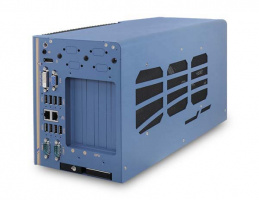
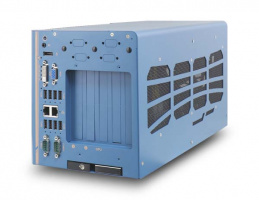
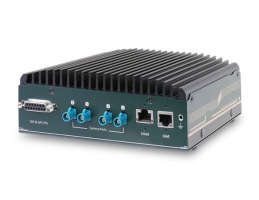
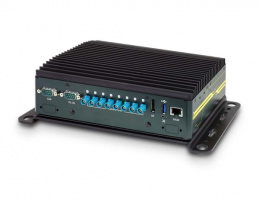
Our client chose the Neousys edge AI computers. The system comes with a patented damping bracket to withstand in-vehicle shock and vibration conditions; accepts wide range DC input from 8 to 48V with ignition control; has M.2 slot for 5G/4G realtime data upload or mini PCIe to expand WiFi wireless modules to send signals to the vision-based warning system worn on workers.
To accommodate the installation of graphics cards for operating in in-vehicle conditions, some systems come with a dedicated adjustable graphics card bracket. The bracket act as an extension of the enclosure framework to firmly secure the graphics card in-place while the width/ height adjustability is to suit various graphics cards available on the market. The connectors (Ethernet, USB, etc.) come with screw-lock mechanism to ensure cables stay connected and does not become loose after continuous shocks or vibration from mobile movements.
To face unpredictable ambient conditions, the system offers wide-range operation temperature from -25°C to 60°C. Whether you are working directly under the sunlight, where temperatures can soar quickly that may cause system performance to throttle and shutdown, or working in below zero conditions where system may struggle to start-up, Neousys' systems is designed to thrive in such conditions.
Neousys rugged edge AI computers key features
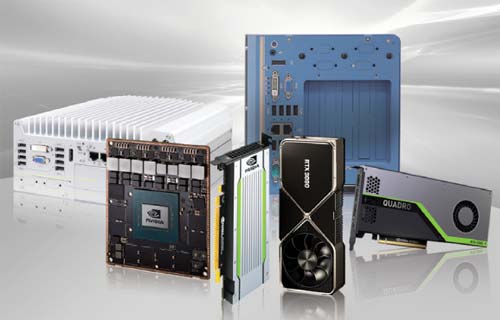
Complete GPU Support
Ranging from RTX 30 series, Tesla, Quadro, Jetson™ Xavier to Google TPU for high-performance or power-efficient applications.
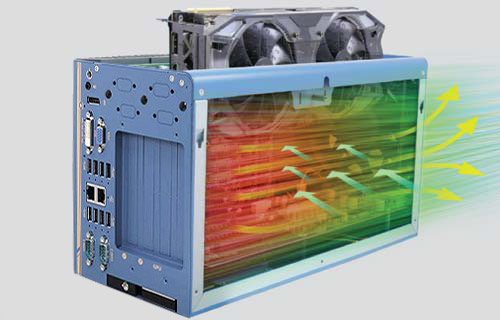
Patented Thermal Design
Offering better heat distribution and dissipation for optimal performance to prevent CPU/ GPU from throttling.
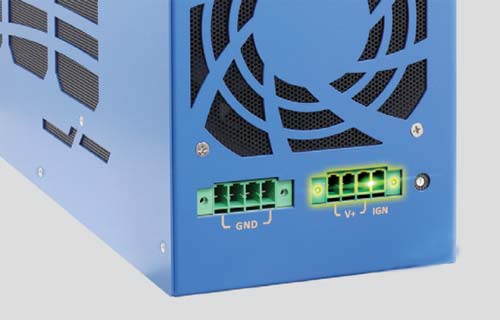
Ignition Power Control
Built-in ignition control to safely shutdown and startup the system.
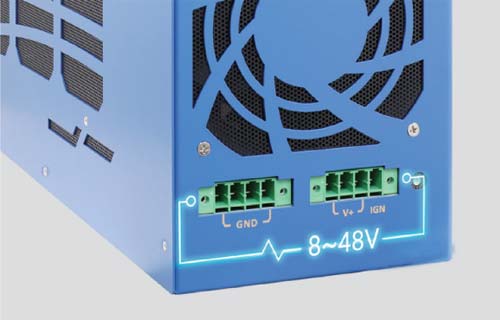
Multi-GPUs via Single Wide-range DC Input
Accepting a wide range DC input from 8 to 48V, and requires only a single source of power input to sustain operation for dual high end RTX 30 series GPU cards.
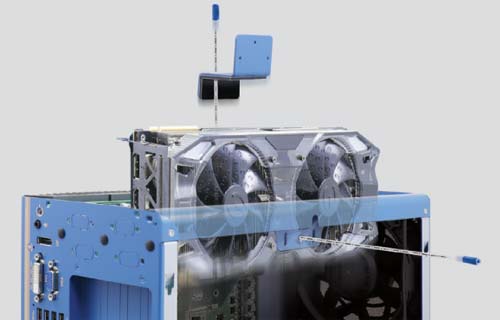
Adaptive GPU Bracket
The patented adaptive GPU bracket ensures installed graphics cards are always secured in position to withstand shock and vibration.
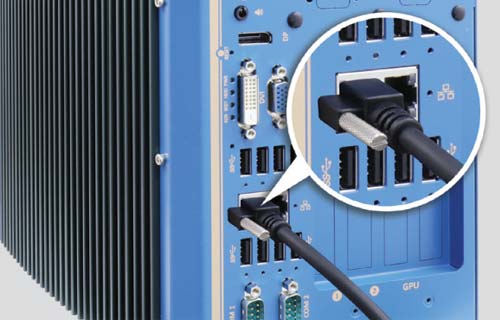
Rich I/Os with Screw-lock Machanism
Available with an abundance of I/Os and screw-lock mechanism for reinforced connections.
Patented Damping Bracket
The patented damping bracket effectively absorbs shock and vibration up to 3Grms for reliable and stable operations.
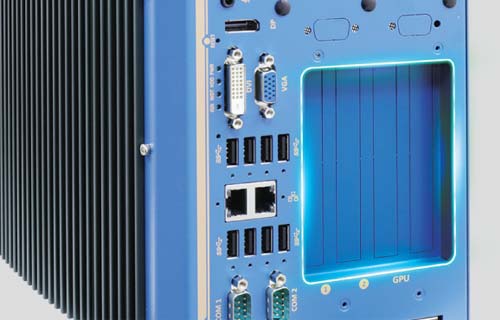
Expansion Capability
PCIe/ PCI add-on slots allow for connectivity or functionality expansion.