Overview
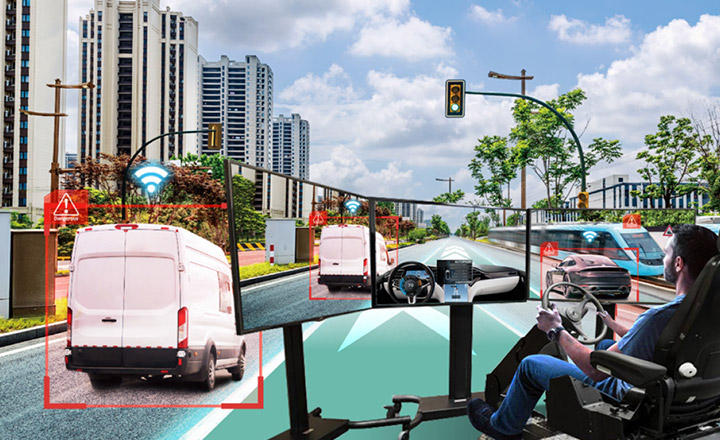
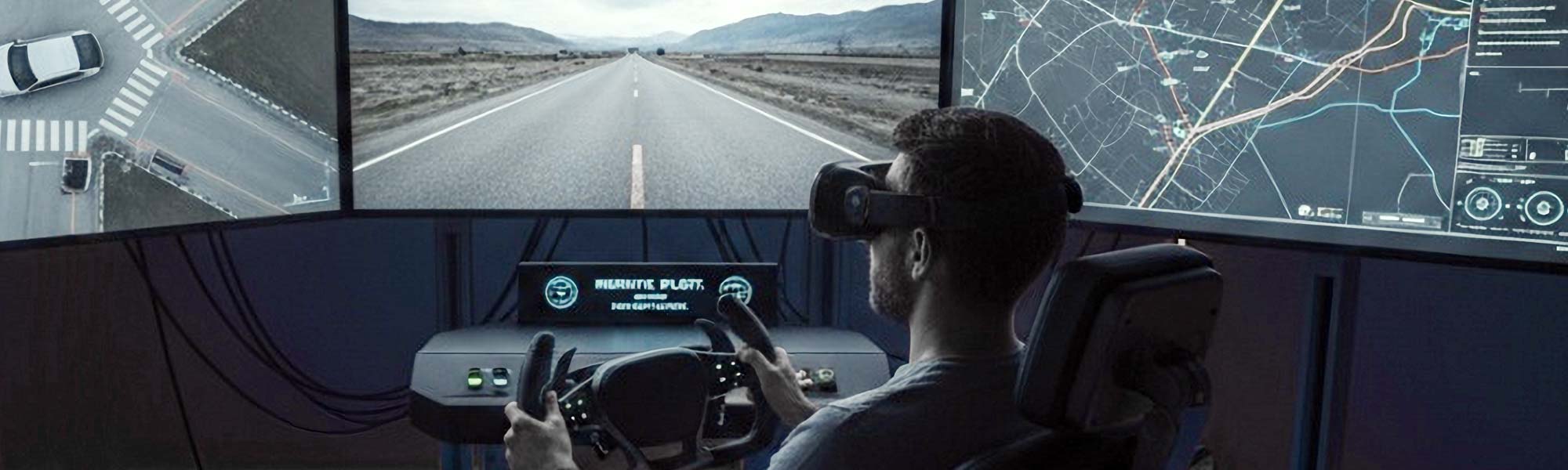
Even with the exciting advances in artificial intelligence (AI) and communication technologies in recent years, there are still challenges ahead for fully autonomous vehicles to drive freely on urban roads without safety concerns. To bridge the gap between full autonomy and reality, and to enhance safety, an Indian academic institute has developed a 5G-based remote vehicle control system that allows a driver in a control room to take over driving decisions of a remote vehicle on the road should the situation arises, with real-time data communication enabled by Neousys' Nuvo fanless embedded computers.
They built a video-assisted teleoperation architecture consisting of a car and a remote-control room, connected and communicating over a 5G wireless network. Two Neousys Nuvo embedded computers with RabbitMQ message broker for control signal transmission and WebRTC for real-time video transmission were installed in the car and control room, respectively, to enable two-way communication.
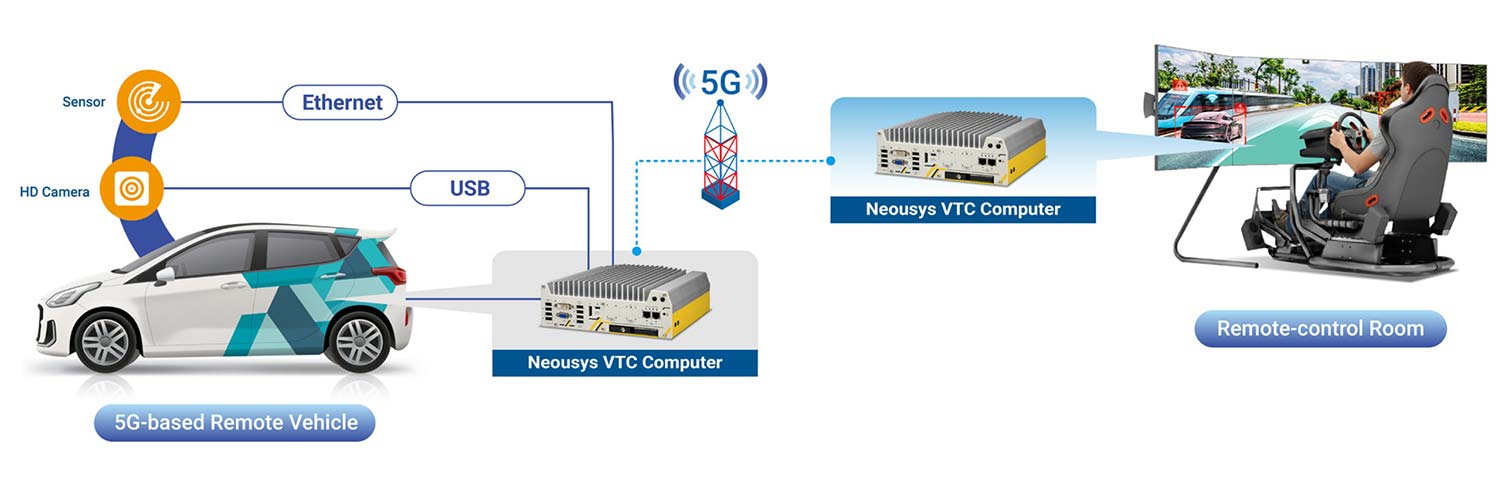
The in-vehicle Nuvo embedded computer is equipped with a 5G communication module, is connected to a MicroAutoBox II system via Ethernet to retrieve sensor and vehicle data, and an HD camera via USB communication to stream live video images to the remote control room.
In the control room, the other Nuvo embedded computer receives data via a 5G modem to view the live stream of the vehicle on the road on an LCD monitor. To maneuver the vehicle, the Logitech G29 gaming wheel and pedal system is connected to the Nuvo system, enabling remote control of the vehicle.
The results showed that the remote-control room and the vehicle were able to communicate flawlessly. With the vehicle maintained at a speed range of 30 to 40 km/h, the average end-to-end total latency over the 5G cellular network was within 270 ms, and the car executed the steering, braking, and shifting signals almost perfectly.
Challenges
- Real time data processing:Although the system is equipped with a 5G communication network, if the hardware is not powerful enough to support real-time data processing and data exchange, the communication may stall and the overall data latency of the system may not be optimized for operation efficiency.
- Extreme harsh operating environment:High-performance computing and high data throughput pose heat dissipation and rugged design challenges to maintain operational and connection reliability, especially in automotive applications that are subject to constant shock, vibration, and other in-vehicle harsh conditions.
Solution
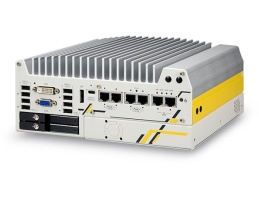
The Neousys Nuvo Series, featuring an Intel® 14th/13th/12th Gen Core™ 24C/ 32T 35W/ 65W CPU and stateof- the-art I/O with a field-proven thermal solution and fanless design, as well as a number of Neousys patented anti-shock and vibration designs, meets the performance and reliability requirements of this teleoperated driving project.
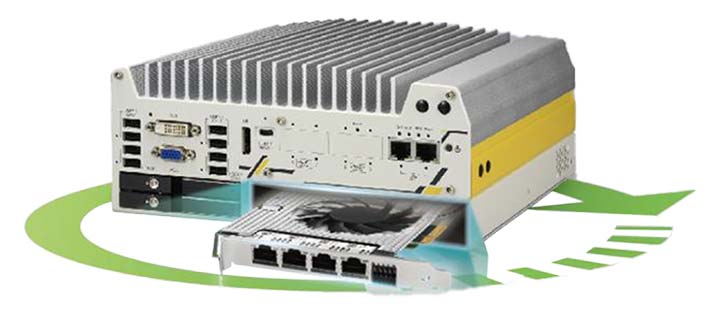
The Advantages of Neousys Nuvo Embedded Series
- High performance:Powered by the latest 24-core, 32-thread Intel Core desktop processor and combining the latest DDR5 memory bandwidth and PCIe Gen4 NVMe high-speed disk read/write, the Neousys Nuvo computer provides a significant performance boost to this remote driving project.
- High data throughput IO:Equipped with state-of-the-art I/O connectors, including 6 x 2.5GbE and 1x Gigabit Ethernet ports with PoE+ PSE option, one USB 3.2 Gen2x2 Type-C port with 20 Gbps bandwidth, and 6 USB 3.2 Type-A ports for USB3 camera connectivity, Nuvo series supports this 5G application with the fastest data exchange and minimized latency.
- High reliability and stability:Featuring true wide operating temperature range of -25°C to 70°C and MIL-STD certification to withstand shock and vibration, ensuring reliability and stability for in-vehicle applications.
- High expandability:The Nuvo embedded computer offers the option of expansion methods, including a patented expansion Cassette module for adding function-specific PCIe/PCI cards, the proprietary MezIO interface with various IOs such as RS-232/422/485, isolated DIO, ignition power control and storage expansion, and internal mini-PCIe/M.2 interfaces, providing unparalleled versatility and expandability to meet users' needs and desires.