Related Product 1: - Please select Product -
Related Product 2: - Please select Product -
Related Product 3: - Please select Product -
Related Product 4: - Please select Product -
Related Product 5: - Please select Product -
Related Product 6: - Please select Product -
Related Product 7: - Please select Product -
Related Product 8: - Please select Product -

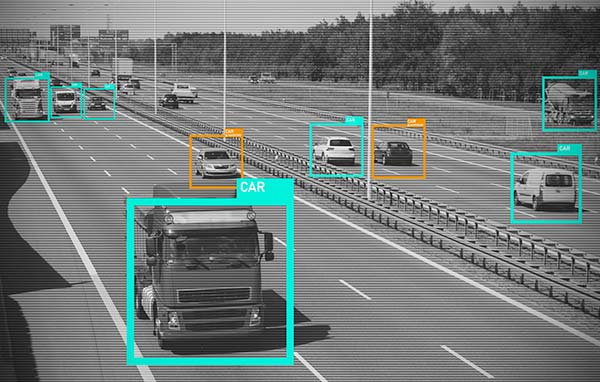
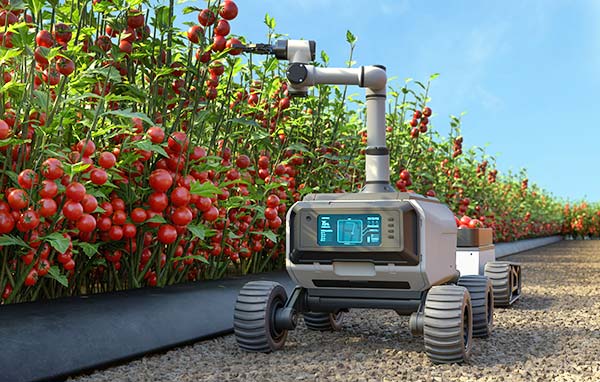
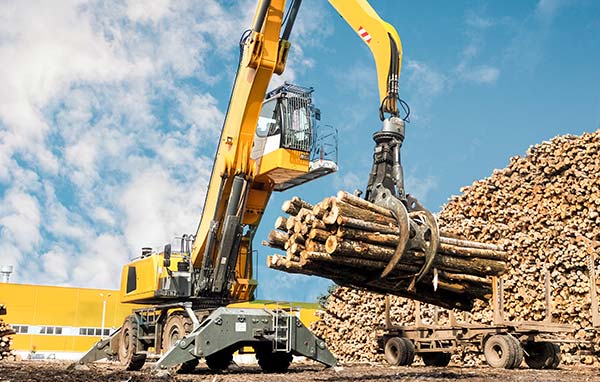
In today's accelerating industrial landscape, the demand for higher CPU performance in industrial computers has reached unprecedented levels. As industries embrace digital transformation, edge computing, and AI-driven automation, processors with AI-capable performance have become indispensable.


Key Trends Driving the Need for High CPU Performance in Industrial Computers:

  • AI and Machine Learning Integration
    Industrial applications increasingly rely on AI and machine learning (ML) for predictive maintenance, quality inspection, and process optimization. These tasks require processors with built-in AI acceleration, such as the AI NPU (Neural Processing Unit) featured in the Intel Core Ultra 200 series. By handling AI inference directly at the edge, these processors minimize latency and reduce reliance on cloud computing.
  • Edge Computing Proliferation
    Edge computing is shifting data processing from centralized cloud servers to local devices. Industrial computers must now handle real-time processing of vast amounts of data generated by IoT sensors, cameras, and machines.
  • High-Resolution Image and Video Processing
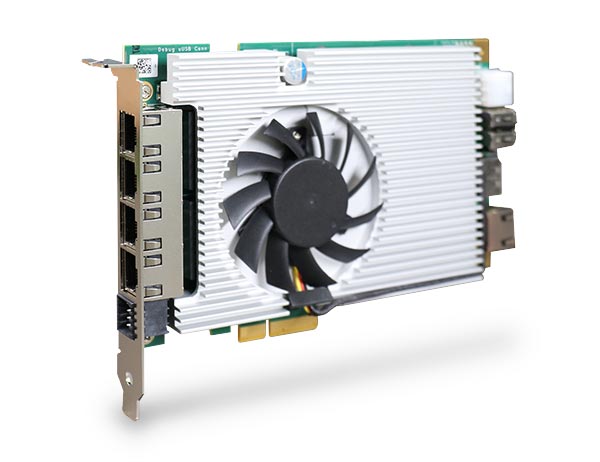
    From automated optical inspection (AOI) in manufacturing to facial recognition in security systems, industrial applications demand the processing of high-resolution images and videos. High-performance CPUs, with their advanced computing capabilities and support for high-speed interfaces like PCIe 5.0, seamlessly integrate with GPUs and frame grabbers, ensuring smooth handling of high-bandwidth image data.
  • Increased Multitasking Requirements
    Modern industrial environments demand systems capable of running multiple applications simultaneously, such as data acquisition, machine control, and real-time analytics. Complex computing requires the CPU to be able to handle multiple tasks in real time and even support large-capacity memory so that they can operate simultaneously without affecting performance.


Challenges of High-Performance CPUs in Industrial Computers

  • Thermal Management
    Higher CPU performance means increased heat generation during multitasking operations. Without effective thermal dissipation, excessive heat can negatively impact system stability, reliability, and even safety, ultimately reducing uptime.
  • Power Design
    High-performance CPUs require greater power consumption. Coupled with the power demands of additional I/O devices, designing a stable power supply becomes a challenge. Industrial computers also need to accommodate wide-range DC inputs due to varying voltage stability in deployment environments.
  • Harsh Operating Conditions
    The proliferation of edge computing has driven advanced applications to the edge, where industrial computers face challenging environmental conditions such as confined spaces, vibration, shock, humidity, and salt mist.

Learn more about Neousys' Rugged DNA and how we overcome these challenges to deliver durable, reliable, and fanless industrial computers.

  • Why is Heat Dissipation Important to Industrial Computer Stability? (Learn More)
  • What are Benefits of the Neousys Fanless Computer? (Learn More)
  • Revolutionizing Fanless Computers in Confined Spaces (Learn More)


Conclusion

The rising complexity of industrial applications and the shift toward edge computing and AI underscores the need for high-performance CPUs in industrial computers. By adopting these advanced processors, industries can achieve greater efficiency, reliability, and scalability, paving the way for the smarter, more automated applications.


Related Product 1: - Please select Product -
Related Product 2: - Please select Product -
Related Product 3: - Please select Product -
Related Product 4: - Please select Product -
Related Product 5: - Please select Product -
Related Product 6: - Please select Product -
Related Product 7: - Please select Product -
Related Product 8: - Please select Product -

Industrial Computers in Harsh Environments

How can equipment maintain stable operation in high-temperature factories, humid coastal areas, or vehicles subjected to intense vibrations? As edge computing applications expand, industrial computers are becoming the core pillars of application scenarios. However, these devices must overcome challenges such as high temperatures, humidity, salinity, and vibration. In this article, we will analyze how industrial computers address these challenges and provide guidance for you to choose the right solution.


How do industrial computers deal with harsh industrial conditions?

  • High-Temperature:
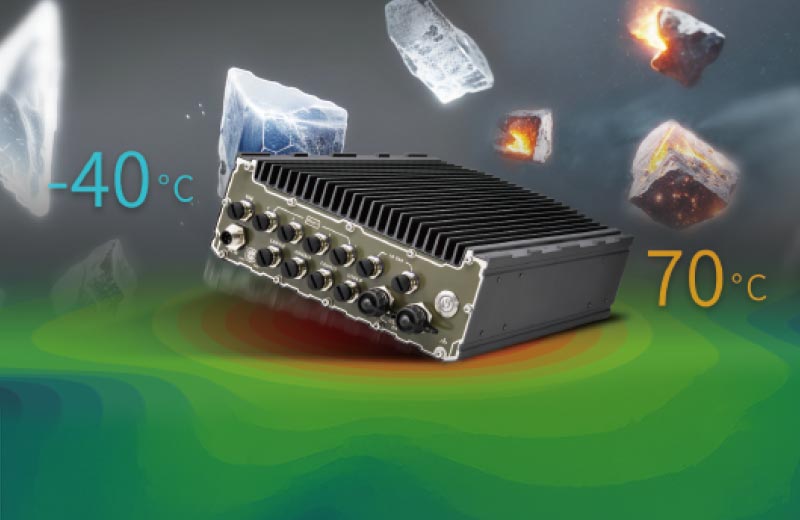
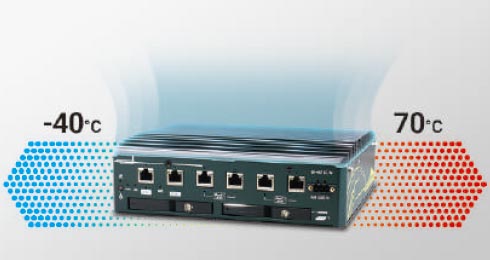
    High temperatures can cause electronic components to overheat, leading to system throttling, accelerated aging, and even failure. To address this challenge, industrial computer manufacturers adopt wide-temperature designs, ensuring that equipment can withstand extreme temperatures from -40°C to 70°C. In addition, the application of fanless structures and high-efficiency thermal conductive materials effectively improves heat dissipation efficiency and prevents overheating problems.
  • Humidity:
    High-humidity environments can easily cause short circuits and corrosion of metal components. In addition to moisture-proof coatings providing an extra protective layer for internal circuits, sealed housing designs further prevent moisture from entering, ensuring stable operation of the equipment. Industrial computers designed to meet IP ratings can be deployed into environments with high humidity or even underwater, ensuring stable operation in their respective environments.
  • Salinity/ Corrosion:
    In applications close to coastal sealine or on ships, high-salt content environments accelerate the oxidation and corrosion of metal components. To address this, industrial computers may apply extra coatings or use stainless steel housings to improve corrosion resistance at the material level and extend service life.
  • Vibration and Shoc:
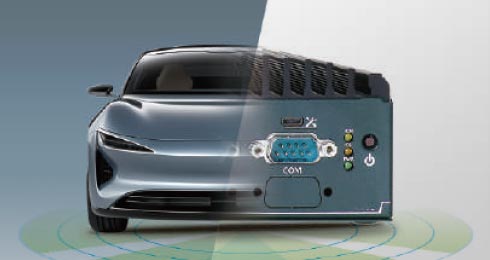
    Vibration and shock are inevitable in industrial automation and transportation. Sensitive components such as hard drives and connectors may be damaged by vibration. To counter this, industrial computers can replace traditional hard drives with solid-state drives (SSDs) and adopt shock-resistant structural designs to ensure stable operation under high-vibration conditions. Taking this design to another level, Neousys Technology's patented anti-vibration design can reduce the impact of high and low-frequency vibrations on the system in automotive environments. The design even extends to add-on GPU cards, securing the card in-place and prevent possible damages caused by vibration in in-vehicle environments.
  • Dust and Airborne Particles:
    Dust can enter the equipment via fan vents and connector openings to damage circuits or obstruct the cooling system. Fanless design is one of the most effective solutions for dealing with dust, and in addition, housings that meet IP65 or higher protection ratings also provide excellent dustproof performance.

  • Industrial Computers Designed to Thrive in Industrial Environments

    Compared to general-purpose computers, industrial computers have significant advantages in terms of durability, stability, and customization capabilities. Through rigorous testing and certification that meet international standards, industrial computers can meet the needs of diverse applications.

    Neousys Technology focuses on the design of rugged embedded computers, providing high-quality products with wide temperature operation, vibration resistance, and international certifications such as EN50155, EN45545, and UL to accelerate project implementation while ensuring safety and reliability.


    Conclusion

    When facing extreme environments, choosing industrial computers with excellent durability is crucial. Through innovative technologies such as wide temperature, moisture-proof, shockproof, and dustproof, industrial computers can easily cope with challenges such as high temperature, humidity, salinity, and vibration to provide operation stability and efficiency.


    Related Product 1: POC-700-FT Series
    Related Product 2: Nuvo-9531-FT Series
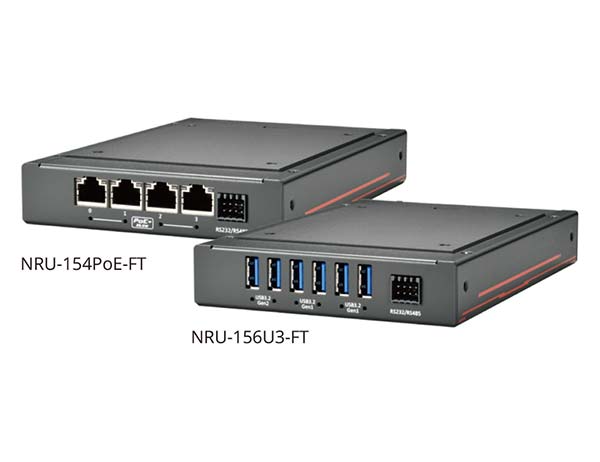
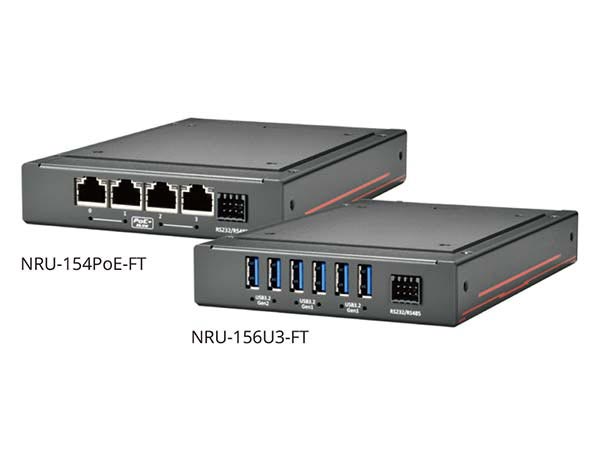
    Related Product 3: NRU-154PoE-FT/ NRU-156U3-FT
    Related Product 4: FLYC-300 Series
    Related Product 5: - Please select Product -
    Related Product 6: - Please select Product -
    Related Product 7: - Please select Product -
    Related Product 8: - Please select Product -

    Industrial Automation: Stability is Key!

    For critical applications and year-round operations, the stability of equipment is crucial for improving production efficiency and reducing costs. However, traditional single-board computers or 4U embedded computers based on PCI Express, USB, and other interfaces often face challenges from environmental factors like temperature, dust and vibration. These issues lead to increased failure rates, decreased uptime, and hidden production costs.


    Fanless Computers: The Ideal Partner for Automation

    Fanless computers offer a new solution to these problems. Through advanced thermal design and high-quality components, they dissipate heat effectively without relying on fans, ensuring stable and reliable operation.

    From the perspective of system integrators or end-users in factory automation, fanless computers offer several advantages:


    1. Reliability and Durability

    2. Efficient Thermal Management

    3. Environment Adaptability

    • Wide Temperature Range:
      Fanless computers typically operate within a broad temperature range, making them suitable for extreme conditions such as high or low temperatures, ensuring stable operation.
    • Wide DC Input with SuperCAP Protection:
      Accepting wide range 8V to 48V DC input, the system can be deployed in various industrial conditions. And with Neousys patented SuperCAP, it ensures the connected system is protected against electrical fluctuations, sudden loss of power, etc.

    4. Lower Maintenance Costs

    • High Reliability:
      No moving parts means fewer breakdowns.
    • Reduced Maintenance Frequency:
      The fanless design eliminates the need for fan cleaning or replacement, cutting down on maintenance efforts and costs.
    • Increased Uptime:
      Greater reliability means less downtime, boosting production efficiency.

    5. Efficiency

    6. Safety

    • No Spark Risk:
      Fanless designs eliminate the risk of sparks from fan failures, improving system safety.

    Conclusion

    In automation applications, the reliability, durability, and environmental adaptability of fanless computers are making them an increasingly popular choice. While the initial investment may be slightly higher, the long-term benefits—higher reliability, lower maintenance costs, and increased productivity—make fanless computers a worthwhile investment for the future.


    Related Product 1: POC-766AWP
    Related Product 2: POC-700-FT Series
    Related Product 3: NRU-161V-FT/NRU-162S-FT
    Related Product 4: NRU-154PoE-FT/ NRU-156U3-FT
    Related Product 5: Nuvo-9531-FT Series
    Related Product 6: FLYC-300 Series
    Related Product 7: - Please select Product -
    Related Product 8: - Please select Product -

    As edge computing migrates to devices like vehicles, ships, drones, and semiconductor equipment, it often encounters harsh environments. To protect sensitive components, industrial computers and equipment are typically housed in sealed or waterproof enclosures. However, this creates a new challenge: heat dissipation.

    Traditional cooling methods, like pre-installed fans, are often impractical due to the limited space within these enclosures and waterproof cases. This creates a significant challenge for system integrators and manufacturers who prioritize space optimization.


    Finding a Two-in-One Solution

    Ideally, we need a cooling solution that addresses both environmental protection and heat dissipation within these space-constrained enclosures , and Neousys thought out of the box on this one.

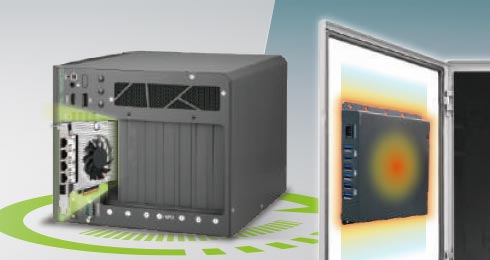
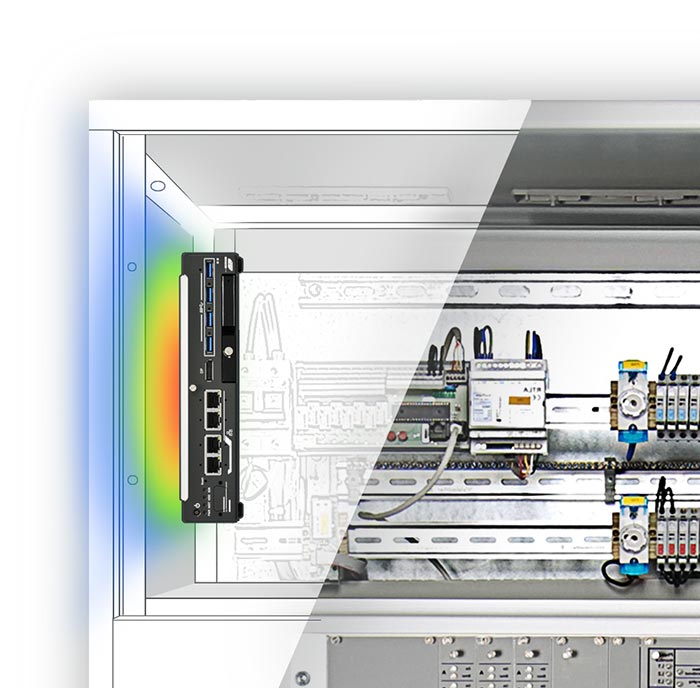
    What if we attach the heat sink to a larger cooling medium? By expanding the cooling area while reducing the size of the computer. Neousys' flattop heatsink design replaces the active cooling fins on top of the industrial computer with a larger heat sink, which directly attaches to the cabinet or box. This maximizes cooling efficiency through adhesion to the cabinet surface.

    While maintaining performance specifications, this design accommodates a wide temperature operating range, avoids the continuous temperature rise within the sealed box. Plus, according to Neousys’ real practice, this flat-top design can even reduce the height of the industrial computer by up to 28%, comparing to its same-grade products. This innovative design makes the overall size of the machine more compact, making it an ideal solution for cabinet installations and automation equipment in confined spaces.


    Case Study

    Automated Inspection in Harsh Industrial Environment:
    Find Neousys' in-cabinet IPC with a flattop heatsink, designed for reliable vision inspection in harsh environments. Discover how it optimizes cooling, saves space, and enhances device placement flexibility. (Learn more)


    Recommended Flattop Heatsink Industrial Computers

    Neousys offers four choices of flattop heatsink industrial computers based on computing performance:

    Low-power-consumption High-performance Edge AI Computing Low-SWaP
    IP67 Waterproof Computer with Intel® Core™ i3-N305
    Intel® Alder Lake Ultra-Compact Embedded Computer
    Intel® 14th/13th/12th-Gen Compact Fanless Computer
    NVIDIA® Jetson Orin™ NX/ Nano Fanless Edge AI Computer
    NVIDIA® Jetson Orin™ NX Edge AI Computer
    Low-SWaP AI Mission Computer Powered by NVIDIA® Orin™ NX


    FAQ

    Q1: How do flattop heatsink industrial computers attach to the cabinet

    We have reserved screw holes that can directly secure the cabinet and flattop heatsink to ensure adhesion. Please contact us for further information.


    Q2: What type of material cabinet or box can be adhered to? How is the cooling performance?

    It is recommended to install on metal materials such as steel/aluminum plates, which are conducive to surface cooling. Cooling performance varies based on the adhesion material, area, and installation environment (e.g., presence of airflow). After rigorous testing, with steel/aluminum plates as the interface, the computer can operate at 100% under 60~65 degrees. Please contact us for further information.


    Watch Video


    Related Product 1: Nuvo-9000 Series
    Related Product 2: Nuvo-9501 Series
    Related Product 3: Nuvo-9531 Series
    Related Product 4: Nuvo-9160GC Series
    Related Product 5: Nuvo-2600 Series
    Related Product 6: Nuvo-8111
    Related Product 7: Nuvo-8000 Series
    Related Product 8: - Please select Product -

    Introduction

    With the continuous advancement of computer performance, heat generation has also increased significantly. While traditional fan cooling methods can effectively lower computer temperatures, they introduce dust and debris, reducing computer operation reliability and even affecting lifespan and uptime. As material manufacturing technologies progress, fanless industrial computer cooling technologies have developed, significantly enhancing computer performance and reliability, becoming one of the common cooling methods in industrial computer design.


    Fan-cooled vs fanless industrial computers

    Fan cooling is the most common computer cooling method. Fans remove heat from the heatsink, expel hot air from within the computer, and draw in cool air, achieving airflow and heat dissipation.

    Type Fan Cooling Fanless Cooling
    Structure Simple, low cost Complex, higher cost
    Dust/ Debris Prone to dust accumulation Simple
    Maintenance Frequent(dust/ debris cleaning, fan maintenance) Minimum(near zero maintenance)
    Application Range Application must be habitable and provide easy access to computer due to maintenance requirements Application can be harsh environments and confined space deployment
    Noise Moderate to loud Near silent

    What are the advantages of Fanless Industrial Computers

    Compared to fan-cooled industrial computers, fanless industrial computers use alternative cooling methods with strategic component placement and increased-size heatsinks being the most common. This effectively avoids the heat-soak, dust and debris problems caused by fan-cooled industrial computers.

    • Dust and debris: The fanless design of the entire unit minimizes dust, debris, and other foreign objects in the air from entering the computer, reducing damage or affecting heat dissipation.
    • Reliability: Since fanless industrial computers do not use fans, they are less prone to dust accumulation or reduced heat dissipation efficiency. Therefore, they have a lower failure rate, meeting the requirements for 24/7 operation.
    • Low power consumption: Without active air cooling, the design must consider power consumption and minimizing heat generation for a lower overall power expenditure and deployment costs.
    • Compact size: Fanless industrial computers do not need to reserve space for air circulation so the overall size can be more compact. Therefore, they are more suitable for installation in narrow spaces, such as cabinets, carriages, integrated automation equipment, or narrow gaps.
    • Near silent operation: The absence of fans makes fanless industrial computers operate quietly. Making them suitable for deployment in areas that require silence such as in hospitals, and libraries.
    • Maintenance: Fanless industrial computers do not require regular cleaning (fan and system), significantly reducing maintenance (downtime) and improving convenience.

    Overall, adopting fanless industrial computers can reduce downtime, extend system lifespan, and lower operational costs. Therefore, they are more suitable for deployment in harsh environments to meet high-reliability application requirements.


    FAQ

    Q1: Will fanless industrial computers overheat?

    Any computer can overheat, and overheating can lead to decreased system performance and even abnormal shutdowns. Therefore, heat dissipation design is particularly important. Special considerations go into power supplies, components, and other heat-generating parts, as well as the overall structure for fanless industrial computers. At Neousys, we use dedicated from-the-ground-up system design to ensure the stable operation of fanless industrial computers to achieve true wide operating temperature range.


    Q2: Why are fanless industrial computers recommended for industrial applications?

    Industrial applications are mostly in harsh environments such as factories, buses, and trains. System installation are often space-constrained and require 24/7 stable operation. Fanless industrial computers are often considered for their reliability, and ease of installation into tight spaces.


    Q3: Which industries use fanless industrial computers?

    Most industrial application customers will use fanless industrial computers for its near-zero maintenance, compactness, and reliability. They can be found in industries such as semiconductor manufacturing, automobile manufacturing, public transportation, energy management, smart agriculture, smart cities, etc.

    For customers pursuing stable and reliable systems, we strongly recommend using fanless industrial computers. If your operating environment has drastic temperature changes, we would recommend using fanless industrial computers with wide temperature operating range.


    Q4: Can fanless industrial computers be placed in semi-outdoor areas?

    In addition to dust, you need to confirm the temperature, humidity, salinity, vibration, chemical concentration, etc. and choose an industrial computer specification that suits you. If necessary, we recommend choosing computers with IP66/IP67/IP69K ratings for extra environmental condition protection. You can refer to the Neousys SEMIL series (IP67/IP69K rated) or AWP series (IP66 rated) to meet your application’s semi-outdoor environment conditions. We recommend that you confirm the conditions at the deployment site before purchasing the industrial computer.


    Related Product 1: - Please select Product -
    Related Product 2: - Please select Product -
    Related Product 3: - Please select Product -
    Related Product 4: - Please select Product -
    Related Product 5: - Please select Product -
    Related Product 6: - Please select Product -
    Related Product 7: - Please select Product -
    Related Product 8: - Please select Product -

    Propel AI Applications into Extreme Environments

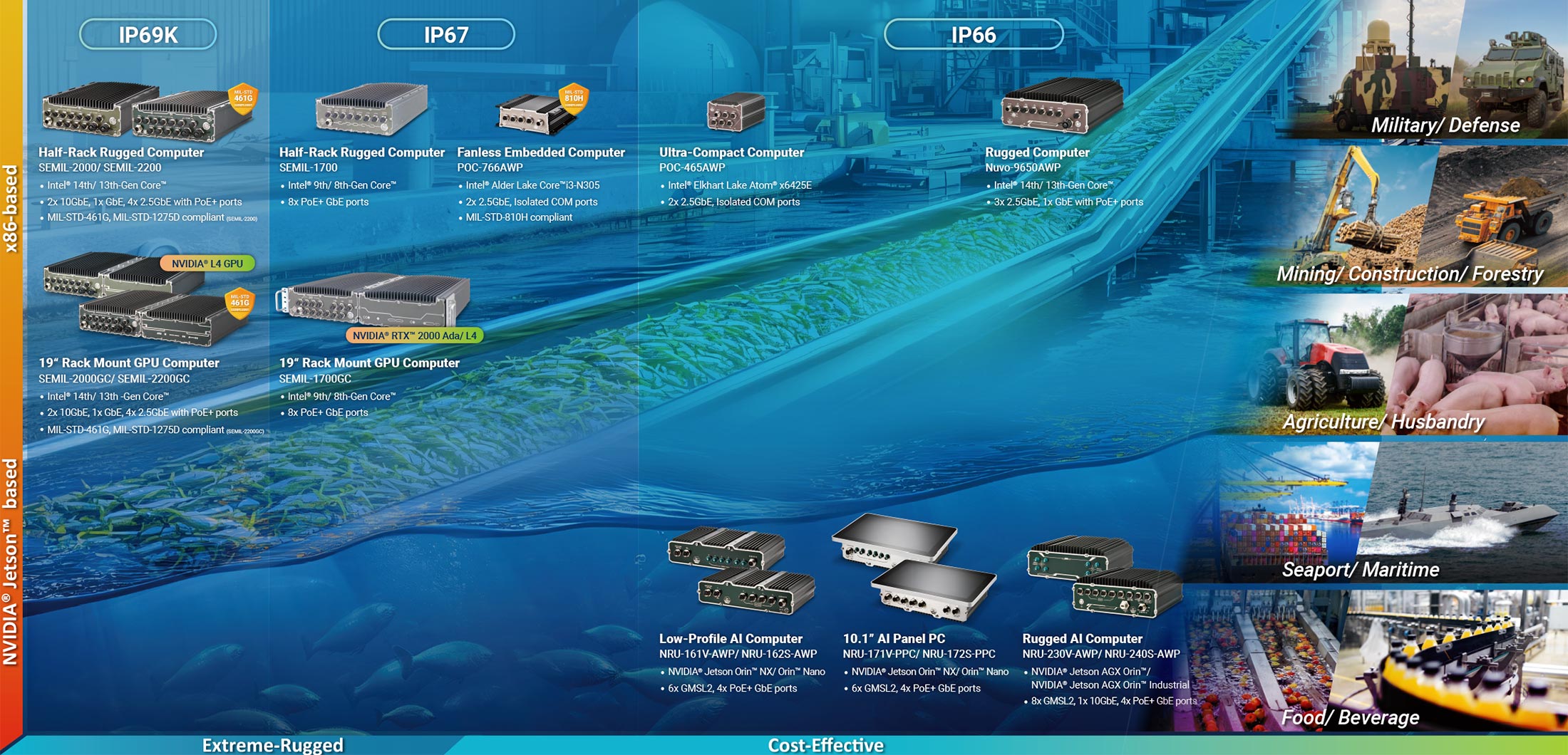
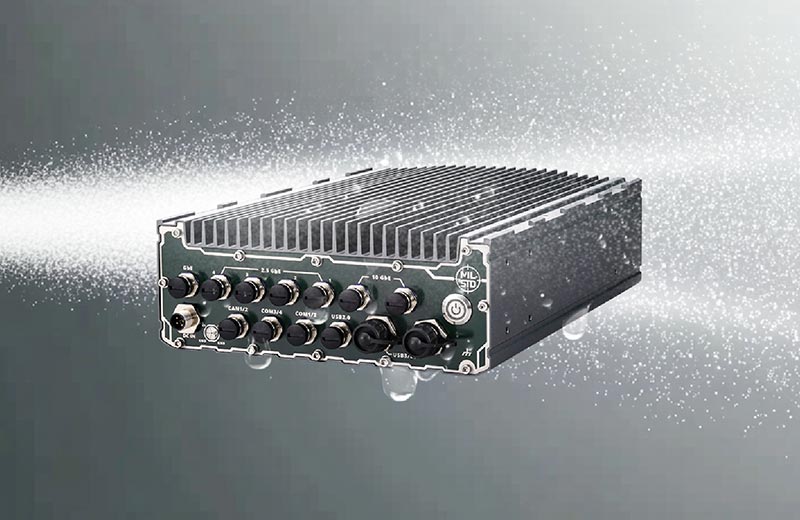
    Neousys waterproof computers is available in variants ranging from IP69K down to IP66 ratings. From rugged SEMIL series, boasting semi-military grade durability, to the AWP series with waterproof functionality, they are designed to excel in extreme environments. The computers feature powerful processing capabilities with advanced thermal management, and reinforced stainless steel design with M12 connectors to ensure uninterrupted operation in extreme temperatures ranging from -40°C to 70°C.


    Neousys IP69K/ 67/ 66-rated Extreme-Rugged Waterproof Embedded & GPU Computers

    Neousys IP69K/ 67/ 66-rated Waterproof Rugged Computers


    Product Highlights

    Waterproof & Dustproof
    Waterproof & Dustproof
    Featuring corrosion-proof stainless steel and aluminum chassis, our computers are built air-tight to withstand moisture, salinity, and other environmental contaminants.


    Rugged Designs
    Rugged Designs
    Supporting -40°C to 70°C wide-temperature operation and complies with stringent MIL-STD-810H shock and vibration standards to ensure reliable operation.


    x86/ NVIDIA® Jetson™ Support
    x86/ NVIDIA® Jetson™ Support
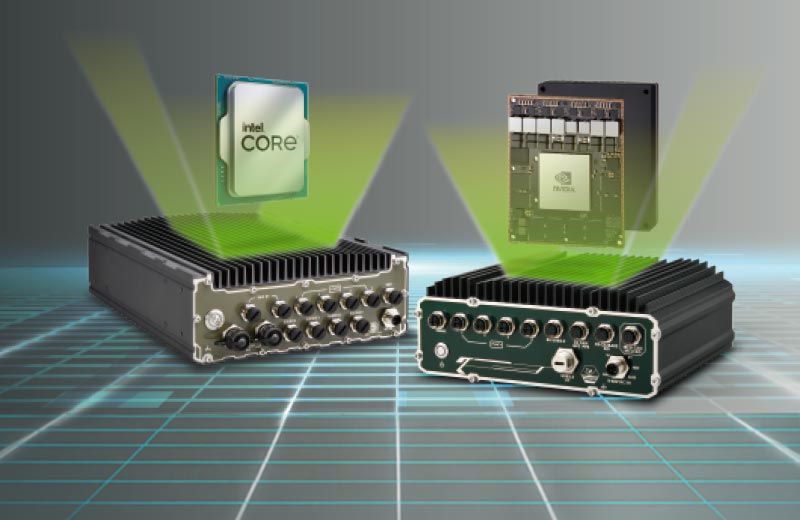
    Powered by Intel processors or NVIDIA® Jetson™ modules, the systems deliver high-performance AI computation for diverse customer needs.


    Powerful Processing
    Powerful Processing
    Powered by Intel® Core™ processors, NVIDIA® GPUs, and up to 64 GB DDR5 memory, the systems deliver exceptional computing power for demanding applications.


    MIL-STD-461G/ 1275D Compliance
    MIL-STD-461G/ 1275D Compliance
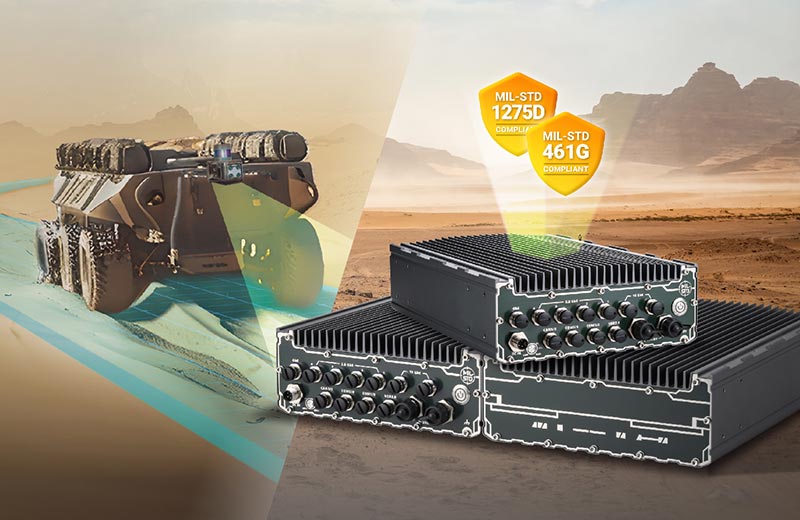
    Tested for electromagnetic compatibility (CE102, RE102, RS103) and vehicle power stability, ensuring dependable performance in ground and in-vehicle defense systems.


    Rich Interfaces via M12
    Rich Interfaces via M12
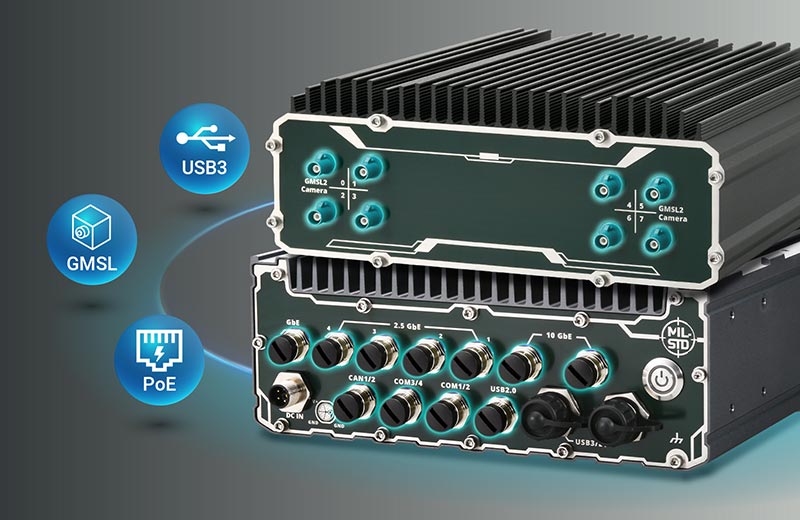
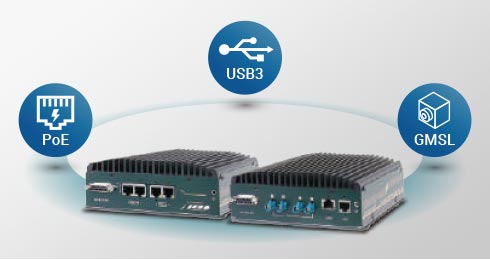
    Providing PoE+ GbE, 2.5GbE, 10GbE, USB3, and GMSL2 ports via durable M12 connectors for diverse sensor integration.


    In-Vehicle Deployments
    In-Vehicle Deployments
    Equipped with 8V to 48V DC input with built-in ignition power control, RS-232/ 485, CAN bus and mini-PCIe for wireless communication expansion.


    Total Cost of Ownership
    Total Cost of Ownership
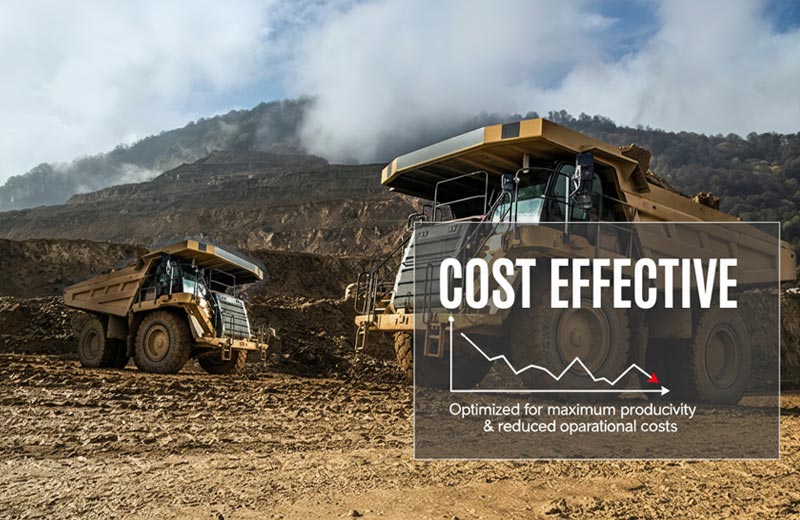
    The cost-effective IP66-rated waterproof systems are optimized to suit industrial computing needs and budgets without compromising on performance or reliability.


    IP69K-rated Extreme-rugged Computers

    SEMIL-2200GC SEMIL-2200 SEMIL-2000GC SEMIL-2000
    SEMIL-2200GC
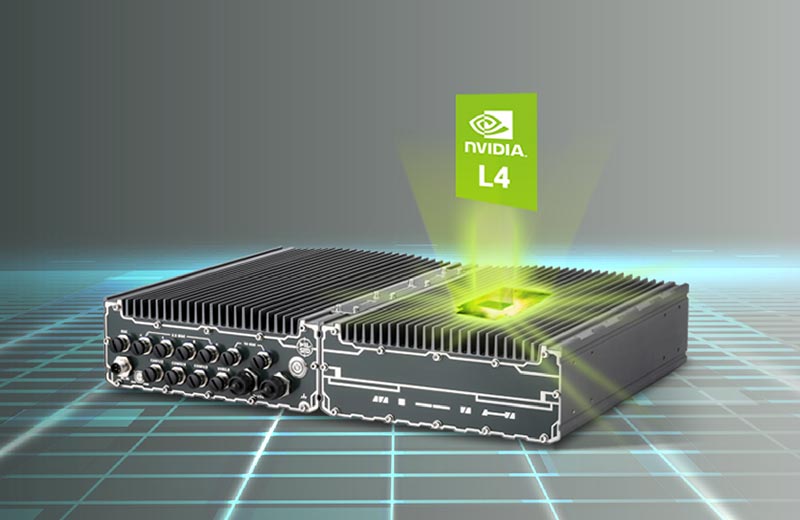
    • NVIDIA® L4 GPU
    • Intel® 14th/ 13th/ 12th-Gen Core™ CPU
    • MIL-STD-461G Compliant
    SEMIL-2200
    • Intel® 14th/ 13th/ 12th-Gen Core™ CPU
    • 2U 19"/2 rack-mount form factor
    • MIL-STD-461G Compliant
    SEMIL-2000GC
    • NVIDIA® L4 GPU
    • Intel® 14th/ 13th/ 12th-Gen Core™ CPU
    SEMIL-2000
    • Intel® 14th/ 13th/ 12th-Gen Core™ CPU
    • 2U 19"/2 rack-mount form factor


    IP67-rated Extreme-rugged Computers

    POC-766AWP SEMIL-1700 SEMIL-1700GC
    POC-766AWP
    • Intel® Core™i3-N305 CPU and DDR5 Memory
    • Compact size. -25 °C to 70 °C temperature operation.
    SEMIL-1700
    • Intel® Xeon® E or 9th/ 8th-Gen Core™ CPU
    • Patented SuperCAP-based power backup
    SEMIL-1700GC
    • NVIDIA® RTX A2000 GPU
    • Intel® Xeon® E or 9th/ 8th-Gen Core™ CPU


    IP66-rated Affordable Waterproof Computers

    NRU-160-AWP  NRU-170-PPC NRU-230V-AWP/ NRU-240S-AWP Nuvo-9650AWP POC-465AWP
    NRU-160-AWP
    • NVIDIA® Jetson Orin™ NX/ Orin™ Nano
    • 6x GMSL2 or 4x PoE+ GbE Ports
    NRU-170-PPC
    • NVIDIA® Jetson Orin™ NX/ Orin™ Nano
    • 6x GMSL2 or 4x PoE+ GbE Ports
    NRU-230V-AWP/ NRU-240S-AWP
    • Powered by NVIDIA® Jetson AGX Orin™ SoM
    • Support 8x GMSL2 automotive cameras via FAKRA Z connectors
    Nuvo-9650AWP
    • Intel® 13th/ 12th-Gen Core™ CPU
    • 8V to 48V DC input with built-in ignition power control
    POC-465AWP
    • Intel® Atom® x6425E CPU
    • 8V to 35V DC input with ignition power control


    Applications

    Military & Defense

    Military & Defense

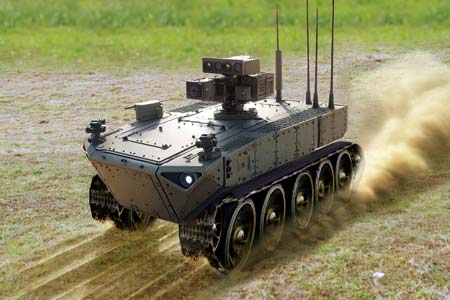
    The extreme-rugged design and GPU support, SEMIL series is ready for in-vehicle deployments to enhance unmanned vehicles’ operation capabilities, making them ideal for communication, ISR and UGV applications in battlefield.
    (Learn more)


    Mining/ Construction/ Forestry

    Mining/ Construction/ Forestry

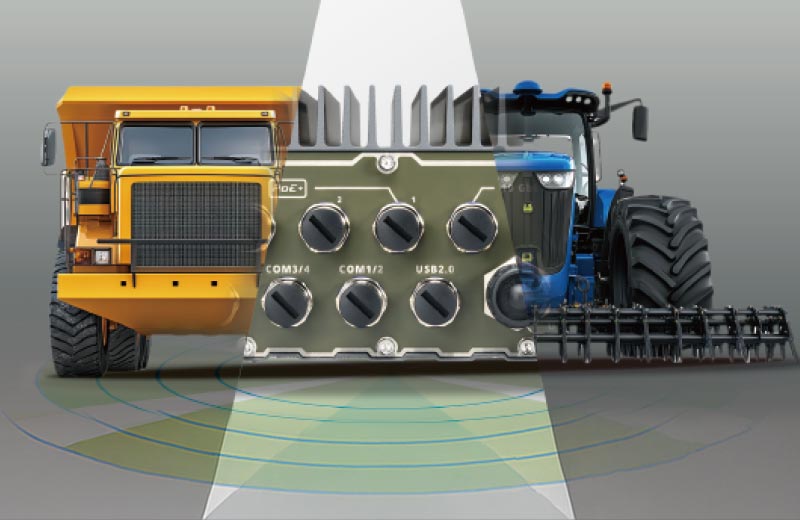
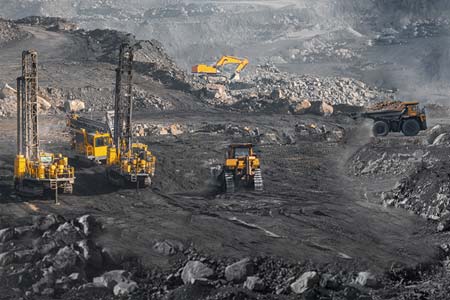
    Featuring shock/vibration resistant and ignition control, they are perfect for deploying on vehicles for remote monitoring and control systems operating at mining sites, construction zones, and forestry operations.
    (Learn more)


    Agriculture/ Husbandry

    Agriculture/ Husbandry

    Its rugged stainless steel construction and optimized processing power aids precision agriculture and automation, such as autonomous tractor and livestock management.
    (Learn more)


    Seaport/ Maritime

    Seaport/ Maritime

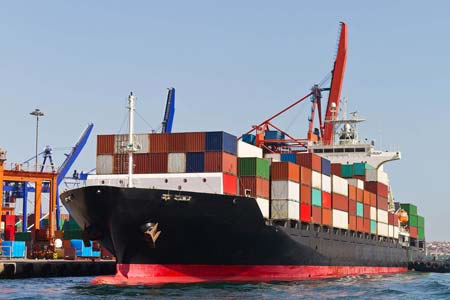
    The air-tight enclosure can withstand environment contaminants which allows for deployment in maritime environments such as for vessel monitoring, navigation, and communication systems.
    (Learn more)


    Food & Beverage

    Food & Beverage

    With AI computation, PoE+, and USB ports for cameras, the systems can provide uninterrupted operations in automated food processing and beverage production lines. The waterproof capabilities make them unfazed to environment contaminants.
    (Learn more)


    Oil & Energy/ Infrastructure

    Oil & Energy/ Infrastructure

    With rugged designs and the ability to meet C1D2 certification requirements, our systems are ideally suited for hazardous environments. They offer the durability and reliability needed to monitor system conditions without the risk of unexpected shutdowns, supporting effective predictive maintenance.


    Related Product 1: POC-900 Series
    Related Product 2: POC-766AWP
    Related Product 3: POC-400 Series
    Related Product 4: POC-40 Series
    Related Product 5: POC-451VTC Series
    Related Product 6: IGT-30D/ IGT-31D
    Related Product 7: - Please select Product -
    Related Product 8: - Please select Product -

    When it comes to small computers, one might assume that size is the only factor to consider. However, for industrial applications or semi-outdoor environments, there are crucial features that determine whether a small computer can withstand the demanding conditions it will be subjected to. So, the question arises: How do you choose a small computer that truly meets the requirements of industrial tasks or semi-outdoor use?

    In this article, we will guide you through the process of selecting a small computer that is tailored to thrive in these challenging environments. From ruggedness and performance to temperature tolerance and waterproof capabilities, we will explore the key criteria to keep in mind. So, if you want to know how to make the right choice, read on.


    Key Takeaways:

    • Choosing a small computer for industrial applications or semi-outdoor environments requires careful consideration of specific features.
    • Compactness, robust performance, wide operating temperature range, stability, and waterproof capabilities are essential factors to look for.
    • A small industrial computer offers benefits like space efficiency, industrial-grade performance, and durability.
    • The ability to withstand wide temperature fluctuations and be resistant to water is crucial for a small computer used in semi-outdoor environments.
    • A rugged and fanless embedded computer provides enhanced durability, reliability, and reduced maintenance requirements.


    Why a Small Industrial Computer

    In today's industrial landscape, the demand for compact and durable computing solutions has grown exponentially. The need for a small industrial computer arises from the space-constrained nature of industrial settings and the specific requirements to meet the challenges of harsh environments.

    Industrial environments often have limited space, making it impractical to use traditional desktop computers. A small industrial computer, also known as a compact computer, overcomes this challenge by offering a space-saving design without compromising on performance and functionality.

    These small computers are specifically engineered to withstand the demanding conditions of industrial applications. Industrial-grade components and rugged construction ensure that they can handle extreme temperatures, vibrations, dust, and other harsh elements commonly found in industrial environments.

    "Small industrial computers are designed to provide powerful performance and long-term reliability in challenging industrial environments."

    In addition to their compact size and robust build, small industrial computers also offer a range of features tailored for industrial applications. They often include multiple connectivity options such as Ethernet, USB, and serial ports, allowing seamless integration with industrial equipment and systems.

    Furthermore, industrial computers are engineered to operate reliably in extended temperature ranges, making them suitable for both hot and cold environments. This wide temperature tolerance ensures uninterrupted performance, eliminating the risk of system failure due to temperature fluctuations.

    When it comes to operating in semi-outdoor environments, small industrial computers offer distinct advantages. Their compact and fanless design allows them to operate silently and without the need for additional ventilation, protecting against dust, moisture, and other impurities that can compromise system performance.

    In summary, small industrial computers play a crucial role in meeting the unique demands of industrial settings. Their compact size, rugged build, and specialized features make them an ideal choice for applications where space is limited, durability is essential, and performance cannot be compromised.


    Features to Consider When Choosing a Small Computer for Semi-Outdoor Use

    When choosing a small computer for semi-outdoor environments, certain features are crucial to ensure optimal performance and reliability. These features include wide temperature tolerance, waterproof capabilities, and a fanless design. Let's explore why these attributes are essential for a small computer to withstand varying weather conditions and operate reliably in semi-outdoor settings.

    Wide Temperature Tolerance

    A small computer designed for semi-outdoor use should be able to withstand extreme temperature fluctuations. Wide temperature tolerance ensures reliable operation even in harsh environments where temperatures can reach extreme highs up to 50°C during midday, or lows down to -5°C in the evening. Whether it's scorching heat or freezing cold, a small computer with wide temperature tolerance can handle it all, making it ideal for outdoor applications.

    Waterproof Capabilities

    Semi-outdoor environments are often exposed to moisture, rain, and other external elements. Therefore, it is crucial for a small computer to have waterproof capabilities. A waterproof small computer can withstand splashes, spills, and even temporary submersion, ensuring uninterrupted operation and protecting sensitive internal components from water damage.

    Fanless Design

    A fanless design is another vital feature to consider for a small computer used in semi-outdoor settings. Fanless computers are designed to dissipate heat passively, eliminating the need for traditional cooling fans. This not only ensures silent operation but also prevents the entry of dust, dirt, or other particles that could potentially damage internal components. Additionally, a fanless design helps reduce maintenance requirements and enhances the overall durability.

    By considering these features in a small computer, users can ensure that their device can withstand the challenges of semi-outdoor environments and deliver optimal performance and reliability. Whether it's for outdoor kiosks, digital signage, or industrial automation, a small computer with wide temperature tolerance, waterproof capabilities, and a fanless design is the ideal choice, regardless of the weather conditions.


    Choosing the Right Small Computer for Your Specific Needs

    When it comes to selecting a small computer for your industrial applications or semi-outdoor environments, there are several factors to consider. By understanding these considerations, you can ensure that you choose a small computer that meets your specific needs and delivers optimal performance.

    • Processing Power: Evaluate the processing power required for your tasks. Consider the complexity of your applications and the level of performance needed to handle them efficiently. Look for small computers with high-performance processors that can handle your workload effectively.
    • Connectivity Options: Assess the connectivity options available on the small computer. Consider the types of devices or equipment you need to connect to and ensure compatibility. Look for small computers with a variety of ports and interfaces to support seamless connectivity.
    • Overall Size: Take into account the physical dimensions of the small computer. Determine the available space in your industrial setting or semi-outdoor environment and choose a small computer that fits perfectly without causing any obstruction.

    Additionally, it is recommended to consider the durability and ruggedness of the small computer. Look for a mini computer that can withstand harsh conditions, vibrations, and temperature extremes often encountered in industrial environments or semi-outdoor areas. Furthermore, opt for a fanless design to eliminate the risk of dust or debris entering the system.

    Remember, selecting the right small computer is crucial for ensuring efficient operations and maximizing productivity in your specific applications. Take the time to carefully evaluate your requirements and choose a mini or compact computer that meets the demands of your industrial tasks or semi-outdoor environments.


    Factors to Consider Small Computer Requirements
    Processing Power High-performance processors capable of handling complex applications
    Connectivity Options Various ports and interfaces to support seamless connectivity
    Overall Size Compact dimensions suitable for space-constrained environments
    Durability Rugged construction and resistance to harsh conditions
    Fanless Design Elimination of dust and debris risks
    Exposure to high humidity or concentration environments IP rating capabilities providing waterproof, dustproof, submersion capabilities, etc.


    Conclusion

    In conclusion, selecting a small computer that is suitable for industrial or semi-outdoor settings requires careful consideration of specific features and requirements. The compactness of the computer is crucial for space-constrained environments, allowing for easy installation and integration. Additionally, robustness and durability are essential, ensuring that the computer can withstand the harsh conditions often encountered in industrial or semi-outdoor settings.

    Wide temperature tolerance is another critical feature to look for, as it enables the computer to function reliably in extreme temperature variations. This is particularly important in outdoor applications where temperature fluctuations can be significant. Furthermore, opting for a fanless design can prevent issues caused by dust, dirt, or debris accumulation, improving the overall reliability and reducing maintenance requirements.

    By following the guidelines outlined in this article, readers can make informed decisions when selecting a small computer. Consider factors such as processing power, connectivity options, and overall size to ensure the computer meets the specific needs of the intended application. Prioritizing compactness, robustness, wide temperature tolerance, and a fanless design will contribute to the optimal performance and longevity of the small computer in demanding industrial or semi-outdoor environments.


    FAQ

    What are the important factors to consider when choosing a small computer for industrial applications or semi-outdoor environments?

    When selecting a small computer suitable for industrial tasks or semi-outdoor use, it is crucial to consider factors such as compactness, robust performance, wide temperature range, stability, and waterproof features. These attributes ensure the computer can withstand the demanding conditions often found in industrial settings or outdoor environments, while still delivering reliable performance.


    Why is a small industrial computer necessary for certain applications?

    Small industrial computers are essential for applications with limited space. These computers are designed with a compact form factor, allowing them to fit into constrained environments without compromising on performance. They are also built to withstand the harsh conditions commonly found in industrial settings, making them ideal for rugged environments.


    What features should I consider in a small computer for semi-outdoor use?

    When choosing a small computer for semi-outdoor use, it is important to prioritize features such as wide temperature tolerance, waterproof capabilities, and a fanless design. Wide temperature tolerance ensures the computer can operate reliably in varying weather conditions. Waterproof capabilities protect the computer from moisture and other environmental factors. A fanless design eliminates the need for cooling fans, reducing the risk of dust and debris damaging internal components and eliminating possible point of failure.


    What are the advantages of a rugged and fanless embedded computer?

    Rugged and fanless embedded computers offer several benefits for industrial or semi-outdoor use. Their rugged construction makes them withstand harsh conditions, including extreme temperatures, vibrations, and shocks. The fanless design eliminates the risk of fan failure and reduces maintenance requirements, as there are no moving parts to replace or clean. These computers are highly reliable and deliver consistent performance in challenging environments.


    How do I choose the right small computer for my specific needs?

    When selecting a small computer for your specific requirements, consider factors such as processing power, connectivity options, and overall size. Assess the computational demands of your intended applications and choose a computer with sufficient processing power to handle them. Ensure the computer has the necessary connectivity options to interface with your existing equipment. Additionally, consider the size and form factor that best fits your workspace or installation location.


    Related Product 1: Nuvo-9000 Series
    Related Product 2: Nuvo-9531-FT Series
    Related Product 3: POC-700 Series
    Related Product 4: Nuvo-10000 Series
    Related Product 5: Nuvo-10208GC Series
    Related Product 6: NRU-220S/ NRU-222S
    Related Product 7: Nuvo-9200VTC Series
    Related Product 8: - Please select Product -

    When it comes to industrial computers, stability is a critical factor in ensuring seamless operations in challenging environments. And one crucial element that plays a significant role in maintaining stability is heat dissipation. But have you ever wondered why heat dissipation is so important? How does it affect the performance and reliability of industrial computers, especially in elevated temperature conditions? And why do some industrial computers handle elevated temperature environments better than others? Let's dive into the world of industrial computing and explore the fascinating relationship between heat dissipation and stability.


    Key Takeaways:

    • Heat dissipation is vital to maintaining stability in industrial computers operating in elevated temperature environments.
    • Inadequate heat dissipation can lead to system failures, component damage, and decreased overall performance.
    • An efficient heat dissipation fanless cooling design that features rugged maximized surface area with evenly-distributed heat-generating component layout contribute to enhanced stability and performance.
    • Not all industrial computers heat dissipation capabilities are created equal, there's more than meets the eye


    Understanding the concept of heat dissipation in industrial computers

    Heat dissipation is the process of removing heat generated by the computer's components and dissipating it into the surrounding environment. It involves conduction and dissipating surface area to effectively transfer the heat away from heat generating components and maintain a safe operating temperature.

    However, when not properly managed, or poor designs that are unable to deal with constant and excessive heat production, it can have detrimental effects on the stability and performance of industrial computers. Inadequate heat dissipation can result in reduced lifespan of components, compromise overall reliability, and eventually system failure.

    Consequences of inadequate heat dissipation:

    To emphasize the importance of heat dissipation, here are some potential consequences of inadequate heat management in industrial computers:

    • System instability and crashes
    • Reduced lifespan of components
    • Performance degradation
    • Increased risk of electronic failure

    These consequences can result in costly repairs, downtime, and interruption in critical industrial processes. Therefore, industrial computers must prioritize efficient heat dissipation mechanisms to ensure stable and reliable operation in demanding environments.

    "Proper heat management is crucial to prevent overheating and avoid costly system failures. Industrial computers must effectively dissipate heat to maintain stability and ensure long-term reliability."


    Heat dissipation techniques for industrial computers

    When it comes to industrial computers, heat dissipation is a crucial factor that directly affects stability and performance. In demanding environments, where extreme temperatures and challenging conditions are common, efficient heat dissipation becomes even more vital.

    One of the primary techniques employed in industrial computers is the use of fanless conduction cooling systems coupled with heat sink for heat dissipation.

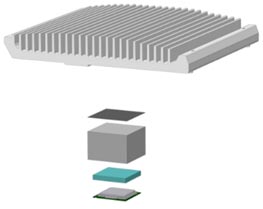
    The traditional embedded design's thermal solution is governed by the existing ready-made motherboards or modules manufacturers utilize. With the CPU socket, memory modules sockets, capacitors, etc. all placed on the same PCB side, this results in component height differences. To rid of the CPU-produced heat, manufacturers must place intermediate thermal conductive materials in between to compensate for the height differences. The common design would be sandwiched as:

    • A layer of thermal grease or thermal pad with a thermal conductivity rating of 5~15 W.m-1.K-1 is placed on top of the CPU integrated heatsink (IHS).
    • Followed by a metallic block (copper with thermal conductivity of 401 W.m-1.K-1 or aluminum with thermal conductivity of 237 W.m-1.K-1), acting as the intermediate and to make up for the height differences.
    • Finally, another thicker and softer thermal pad (approximately with less than 5 W.m-1.K-1 conductivity) makes direct contact with the external heatsink to expel the heat to the ambient environment.

    Fanless computers are designed to operate without the need for traditional cooling fans, offering several advantages. First, the absence of fans eliminates noise, making fanless computers suitable for noise-sensitive environments. Second, the lack of airflow minimizes dust accumulation, reducing the risk of component damage and system failure. Last but not least, fan blades/ ball bearings are moving parts that are subject to failure, so a fanless system essentially mitigates a possible point of failure.

    Comparison Table: Heat Dissipation Techniques


    Heat Dissipation Technique Benefits
    Rugged passive cooling
    • Noiseless operation
    • Minimal dust accumulation
    • Efficient thermal management
    • Thrive in harsh environments
    • Improved durability and reliability
    Active Cooling with Fans Fast heat dissipation
    Advanced Heat Pipe Technology
    • Efficient heat dissipation
    • Enhanced thermal conductivity

    The table above provides a comparison of different heat dissipation techniques utilized in rugged industrial computers. Each technique offers unique benefits, allowing for optimal heat management and stability in these specialized systems.


    How Neousys cooling technique differs?

    Neousys thermal solution seeks to deliver efficient heat transfer and dissipation with components strategically laid-out to avoid heat soak interference. The simplified and effective design is customized and fine-tuned for maximum heat dissipation efficiency that allows Neousys fanless embedded systems to thrive in extreme environmental conditions for true wide temperature operation. Neousys fanless embedded systems differ from others in a number of ways:

    Heat-generating components are segregated. The Neousys design team placed all heat-generating components on the top side, along the perimeter to promote heat dissipation while avoiding heat soaking effect.

    Segregated and evenly distributed to avoid heat-soak. Spacing between heat-generating components are carefully thought and evenly distributed. The in-house circuit design allows heat-generating components, including CPU, chipset, Ethernet controllers and power chokes, to be placed with desired spacing to avoid heat-soak, utilizing every inch of the heatsink.

    Use of unique and extremely efficient premium-grade thermal pad. Unlike common fanless embedded systems that may have layers of heat conductive materials stacked in between, Neousys fanless embedded systems place just a single layer of thermal pad directly between the heat-generating components and the external heatsink, heat conduction ability is direct and effective.

    Thermal design from the ground up. Neousys fanless embedded system is designed and tweaked for maximum thermal efficiency. In a Neousys fanless system, the mechanical design complements thermal efficacy, and vice versa to ensure the system's thermal conduction efficiency is always at the peak. This allows every Neousys fanless embedded system to be truly wide temperature operational, meaning the system can operate from -25°C to 70°C, twenty-four seven. The extremely high thermal dissipation efficiency design offers stability to the system in operation and longevity to electronic components.


    Conclusion - choosing the right industrial computer

    Choosing an industrial computer depends on factors like processing power, temperature range, installation space, and environmental conditions. Temperature range indicates operational stability, tied to heat dissipation capability. Efficient heat dissipation technology maintains optimal temperatures, preventing performance issues and prolonging lifespan.

    Heat dissipation plays a crucial role in maintaining the stability and performance of industrial computers in challenging environments. This article has highlighted the importance of effective heat management in these systems to ensure reliable operation and minimize the risks caused by extreme temperatures.

    When considering industrial computers for challenging settings, it is essential to prioritize rugged designs that incorporate efficient heat dissipation capabilities. These designs, such as system cooling designs and durable components, enable industrial computers to operate consistently and efficiently, even in harsh conditions.

    Investing in reliable systems that can withstand extreme temperatures and efficiently dissipate heat will contribute to long-term operational stability and minimize the risk of system failures and component damage.


    FAQ

    What is heat dissipation in industrial computers?

    Heat dissipation in industrial computers refers to the process of dissipating or removing heat generated during the operation of these systems. It involves the use of cooling techniques, layout design, and selection of components to maintain an optimal temperature and prevent overheating, which can negatively impact the stability and performance of the computer.


    Why is heat dissipation important to industrial computer stability?

    Heat dissipation is crucial to maintain stability in industrial computers because excessive heat can lead to system failures, component damage, and decreased performance. Industrial computers often operate in elevated temperature environments, so effective heat management is essential to ensure reliable operation.


    What are some heat dissipation techniques used in industrial computers?

    Industrial computers employ various heat dissipation techniques to manage and control heat effectively. One common technique is the use of fanless cooling systems, which eliminate noise and minimize dust accumulation. Additionally, rugged designs with efficient heat transfer capabilities, even distribution of heat-generating components, and effective heat sinks help dissipate heat efficiently, ensuring reliable operation in demanding environments.


    How does heat dissipation impact performance in rugged industrial computers?

    Heat dissipation plays a crucial role in ensuring optimum performance in rugged industrial computers. Efficient heat dissipation allows these systems to operate reliably in extreme temperatures, preventing overheating and thermal-throttling that result in performance degradation. Rugged designs with robust cooling systems and durable components contribute to enhanced heat dissipation, resulting in continuous and efficient performance.


    How do I choose the right industrial computer for applications with elevated temperatures?

    When selecting an industrial computer for wide temperature applications, it is essential to prioritize heat dissipation and stability. Consider factors such as temperature range specifications, cooling capabilities, and the ruggedness of the system. Ensure that the chosen computer has efficient heat dissipation mechanisms to withstand the demanding conditions and maintain reliable operation. There are lots of brands and designs to choose from on the market, but not all industrial computers are created equal, so a word of mouth from people who have tried and tested various systems may also help narrowing down the list.


    Related Product 1: - Please select Product -
    Related Product 2: - Please select Product -
    Related Product 3: - Please select Product -
    Related Product 4: - Please select Product -
    Related Product 5: - Please select Product -
    Related Product 6: - Please select Product -
    Related Product 7: - Please select Product -
    Related Product 8: - Please select Product -

    Revenue Report


    2026 Monthly Revenue Report

    (Unit: Thousands of New Taiwan Dollars)
    Month Consolidated Revenue MoM Growth Rate Consolidated Net Revenue Annual Growth Rate
    01 187,708 48.67% 187,708 48.67%
    02 123,544 -3.74% 311,252 22.25%
    03 200,746 22.58% 511,998 22.38%
    04 180,137 26.99% 692,135 23.55%
    05 220,530 87.84% 912,665 34.69%
    06
    07
    08
    09
    10
    11
    12


    Related Product 1: - Please select Product -
    Related Product 2: - Please select Product -
    Related Product 3: - Please select Product -
    Related Product 4: - Please select Product -
    Related Product 5: - Please select Product -
    Related Product 6: - Please select Product -
    Related Product 7: - Please select Product -
    Related Product 8: - Please select Product -

    (In Thousands of New Taiwan Dollars, Except Book Value Per Share and Earnings per share)
    Year 2024 2023 2022 2021
    Condensed Financial
    Position Statement
    Total Asset 1,798,149 1,106,216 920,127 692,563
    Total Liabilities 831,126 251,840 285,753 285,578
    Total Equity 967,023 854,376 634,374 406,985
    Book Value per Share 37.75 33.43 28.03 20.07
    Condensed Consolidated
    Income Statement
    Operating Revenue 1,445,332 1,054,805 1,281,909 976,885
    Profit From Operations 217,722 134,245 227,220 168,414
    Profit Before Income Tax 248,016 135,472 235,714 162,992
    Earnings per Share 7.57 4.51 8.15 5.97


    Related Product 1: - Please select Product -
    Related Product 2: - Please select Product -
    Related Product 3: - Please select Product -
    Related Product 4: - Please select Product -
    Related Product 5: - Please select Product -
    Related Product 6: - Please select Product -
    Related Product 7: - Please select Product -
    Related Product 8: - Please select Product -

    Financial Report


    Fiscal Year Consolidated Report
    Full Fiscal Year
    2025 Download
    2024 Download
    2023 Download
    2022
    2021 Download


    Related Product 1: - Please select Product -
    Related Product 2: - Please select Product -
    Related Product 3: - Please select Product -
    Related Product 4: - Please select Product -
    Related Product 5: - Please select Product -
    Related Product 6: - Please select Product -
    Related Product 7: - Please select Product -
    Related Product 8: - Please select Product -

    Overview

    Neousys' NVIDIA® Jetson™ Rugged Computer solutions are engineered to meet the ever-evolving demands of edge AI applications. From edge inspection and roadside systems to AMR, in-vehicle IVA, and ADAS, these platforms feature rugged designs, versatile onboard camera connectivity, and diverse form factors. Each product is purpose-built to deliver optimal performance and reliability across various deployment environments.


    Selection: Neousys' Jetson Rugged Computer


    Product Highlights

    Rugged, Fanless and Waterproof
    Rugged, Fanless and Waterproof
    Capable of operating from -40°C and up to 70°C in fanless conditions.

    Versatile Camera Support
    Versatile Camera Support
    Compatible with PoE+ GbE/ USB3/ GMSL2 interfaces. Explore the list of GMSL2 cameras with pre-installed drivers >>

    Ready for In-vehicle/ Mobile Deployments
    Ready for In-vehicle/ Mobile Deployments
    Engineered for reliable operation in tough in-vehicle conditions.

    Diverse Application Form Factors
    Diverse Application Form Factors
    Application-driven products such as AI frame grabber, flattop heatsink computer, or mission computer.


    Scenarios

    Robust AI Vision from Factory to Road


    Edge Inspection

    Scenario

    In the past, a CPU-based architecture was used for automation processes with multiple stations along the production line, from cleaning, inspection, sorting, to packing. To enhance overall automation efficiency and precision, integrating additional AI performance into the existing CPU-based automation process is a new trend.

    Challenges

    The challenges of incorporating AI computing into traditional CPU-based 19" rack mount or expansion box pc include:

    • Significant AI performance for real-time image processing from multiple cameras
    • Inability to supply sufficient power to power-hungry GPU cards
    • Issues with heat dissipation from GPU cards
    • Insufficient expansion slots for installing GPU cards and frame grabber cards

    Neousys' Offering

    Neousys' industrial-grade intelligent frame grabber PCIe-NX150 series, and flattop heatsink edge AI computer NRU-150-FT series, are lightweight solutions designed to enhance AI capabilities to existing CPU-based machine vision and inspection systems. They are equipped with full-bandwidth 6x USB3 or 4x PoE+ GbE ports for camera connectivity, 100 TOPS AI performance, while ensuring rugged, wide-temperature operation.


    PCIe-NX154PoE PCIe-NX156U3 NRU-150-FT NRU-156U3-FT
    PCIe-NX154PoE
    NVIDIA® Jetson Orin™ NX Intelligent Frame Grabber Card with 4x PoE+ ports
    PCIe-NX156U3
    NVIDIA® Jetson Orin™ NX Intelligent Frame Grabber Card with 6x USB 3.2 ports
    NRU-154PoE-FT/
    NRU-156U3-FT
    NVIDIA® Jetson Orin™ NX Flattop Heatsink Computer with 4x 2.5GbE PoE+/6x USB 3.2 Ports
    NRU-172S-PPC
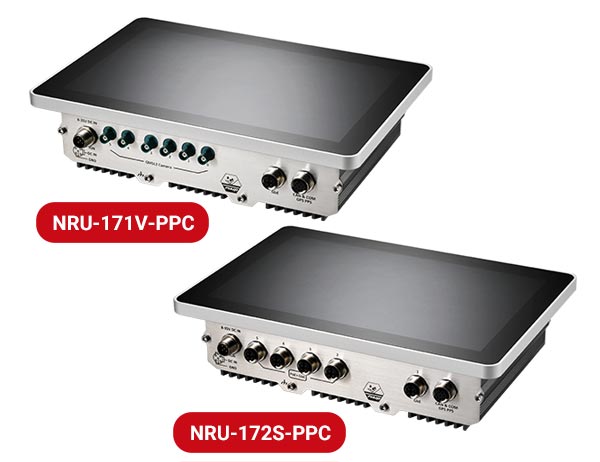
    IP66-rated 10.1" NVIDIA® Jetson Orin™ NX/ Nano Panel PC with 4x PoE+ GbE Ports
    Application

    Roadside IVA

    Scenario

    With urban infrastructures becoming more AI-enabled, such as intelligent traffic, V2X communication, public space IVA, etc., the need to deploy roadside edge AI computers for real-time image capturing and processing has become more prevalent.

    Challenges

    Deploying edge AI computers in roadside cabinets needs to overcome the following challenges:

    • Significant AI performance for real-time image processing from multiple cameras
    • Extreme weather temperatures ranging from freezing winters to scorching summers
    • Heat dissipation inside cabinets
    • Roadside environments causing dust to accumulate inside computers

    Neousys' Offering

    The NRU-220S, NRU-52S+, NRU-154PoE-FT stand out as fanless AI NVRs with built-in connectivity for multiple PoE+/ PoE++ IP cameras. Engineered with a wide operating temperature range, these devices facilitate intelligent video analytics for roadside applications. Furthermore, they include an isolated RS-484 interface for seamless infrastructure communication.

    NRU-240S-AWP NRU-220S NRU-52S+ NRU-150-FT
    NRU-240S-AWP
    IP66-rated NVIDIA® Jetson AGX Orin™ Computer with 1x 10GbE, 4x PoE+ GbE Ports
    NRU-220S
    NVIDIA® Jetson AGX Orin™ AI NVR with 4x Shared PoE+ GbE & 2x 2.5GbE Ports
    NRU-52S+
    NVIDIA® Jetson Orin™ NX Edge AI Computer with 4x PoE++ Ports
    NRU-154PoE-FT/
    NRU-156U3-FT
    NVIDIA® Jetson Orin™ NX Flattop Heatsink Computer with 4x 2.5GbE PoE+/6x USB 3.2 Ports
    Application

    Autonomous Mobile Robots

    Scenario

    There are more and more autonomous Mobile Robots (AMRs) applications ranging from smart agriculture, autonomous warehouse, last-mile delivery. Multiple sensors and sufficient AI performance are essential to enable the AMR to interact with its surroundings.

    Challenges

    One integrating a computing unit into a robot may encounter the following challenges:

    • Multiple camera and sensor connectivities
    • Significant AI performance for real-time image processing from multiple cameras
    • Limited space for deployment
    • Heat dissipation
    • Powered by limited battery capacity
    • Considerations for shock and vibration
    • Mobile communication capability

    Neousys' Offering

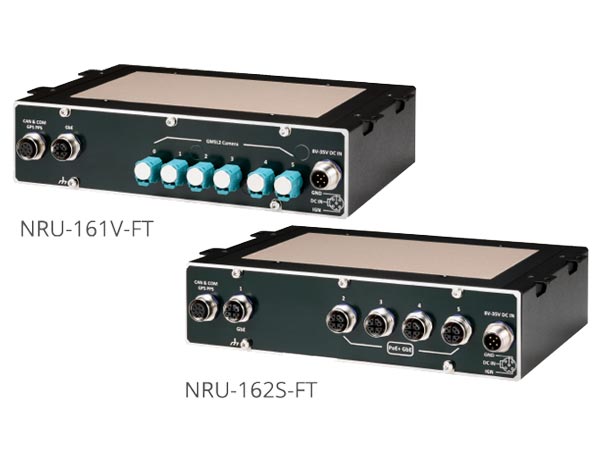
    The NRU series delivers outstanding AI performance for up to six GMSL cameras, all while maintaining an ultra-low power consumption of just 15 to 30 watts, enabling extended operation for AMRs, even on battery power. It supports both 2D and 3D GMSL2 automotive cameras, providing clear vision in dynamic lighting conditions and precise distance measurement for obstacle avoidance. With a wide voltage input range of 8 to 35V and 4G LTE/5G NR connectivity for seamless communication, this rugged, compact AI computer is designed to tackle outdoor challenges, making it the perfect choice for AMR applications.


    NRU-161V-AWP NRU-161V-FT/NRU-162S-FT NRU-51V FLYC-300
    NRU-161V-AWP
    IP66-rated NVIDIA® Jetson Orin™ NX/ Nano Computer with 6x GMSL2, 1x GbE Ports
    NRU-161V/162S-FT
    NVIDIA Jetson Orin™ NX/ Nano Fanless Flattop Heatsink Edge AI Computer
    NRU-51V+
    NVIDIA® Jetson Orin™ NX Edge AI Computer with 4x GMSL2 Ports
    FLYC-300
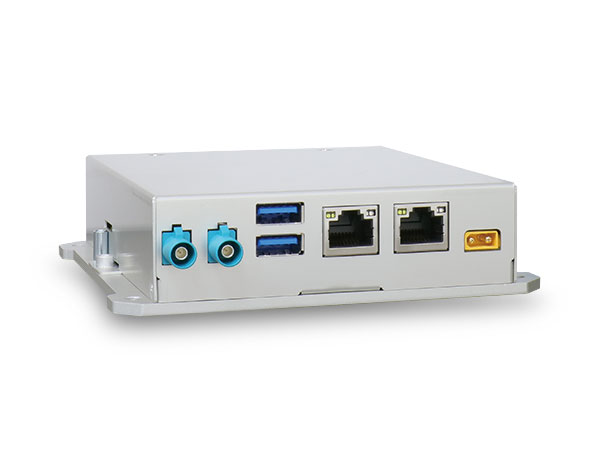
    NVIDIA® Jetson Orin™ NX Drone Mission Computer with 2x GbE, 2x USB3, 2x GMSL2
    Application

    In-vehicle IVA & ADAS

    Scenario

    Intelligent video analytics in vehicles play a crucial role in implementing collision avoidance, recognition, and detection, thereby enhancing in-vehicle ADAS capabilities and overall safety. These applications extend to areas such as off-road vehicle ADAS, teleoperation, and railway intrusion detection.
    Challenges

    To ensure reliable implementation on vehicles, the computing systems need to overcome:

    • Multiple camera and sensor connectivities
    • Significant AI performance for real-time image processing from multiple cameras
    • Limited space for deployment
    • Heat dissipation
    • Powered by limited battery capacity
    • Constant shock and vibration
    • Mobile communication capability
    • Demanding environments like mining, agriculture, or construction sites

    Neousys' Offering

    The NRU series features IP66-rated waterproof, rugged designs that simplify in-vehicle deployments, supporting an 8V to 35V DC input, ignition power control, GMSL2, IP cameras, sensors, LiDARs, and more. The NRU-230V-AWP takes it further with an onboard automotive MCU and an independent M12 port for CAN bus and digital output, enabling real-time monitoring and predictive maintenance, reducing downtime and enhancing functional safety for autonomous vehicles.
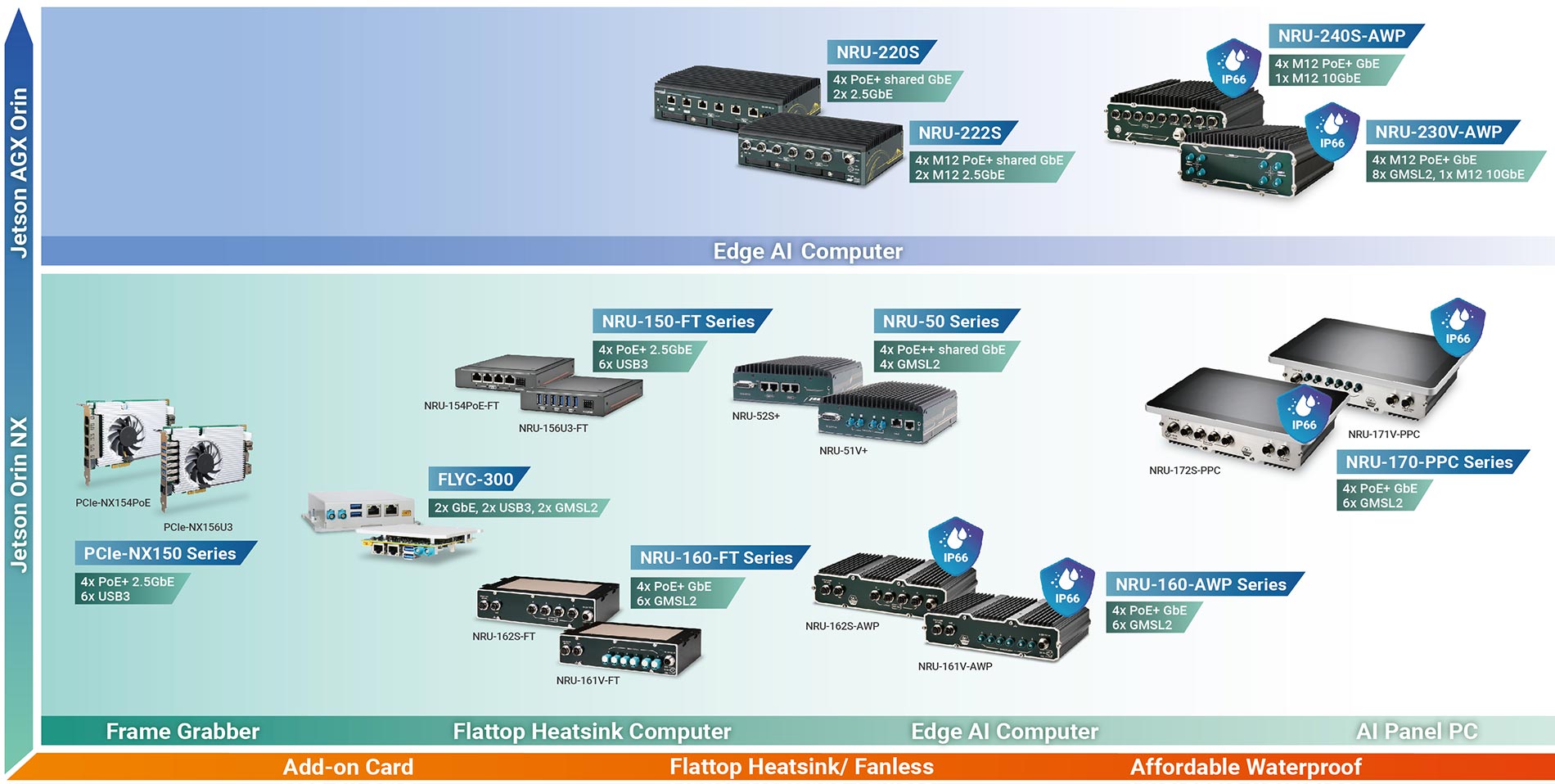

    NRU-230V-AWP NRU-171V-PPC NRU-162S-AWP NRU-222S
    NRU-230V-AWP
    IP66-rated NVIDIA® Jetson AGX Orin™ Computer with 8x GMSL2, 1x 10GbE, 4x PoE+ GbE Ports
    NRU-171V-PPC
    IP66-rated 10.1" NVIDIA® Jetson Orin™ NX/ Nano Panel PC with 6x GMSL2, 1x GbE Ports
    NRU-162S-AWP
    IP66-rated NVIDIA® Jetson Orin™ NX/ Nano Computer with 4x PoE+ GbE Ports
    NRU-222S
    NVIDIA® Jetson AGX Orin™ AI NVR with M12 Connectors
    Application


    Download Brochure

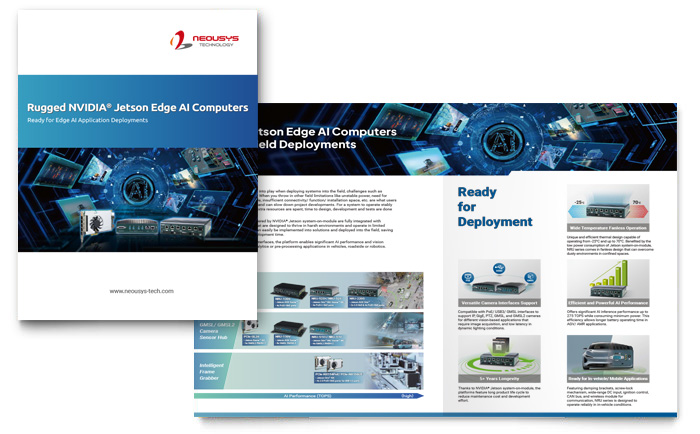
    Rugged NVIDIA® Jetson™ Edge AI Computers Brochure

    Neousys' rugged Edge AI platforms, powered by NVIDIA® Jetson™ system-on-module, are built to thrive in harsh environments. Download the brochure to see how these field-deployable systems save you cost and development time.
    (Download Now)

    Videos

    Rugged NVIDIA Jetson™ Platforms - Edge AI, Anytime & Anywhere

    SWaP-Optimized AI Mission PC Enabling Unmanned Systems

    Roadside IVA with Rugged NVIDIA Jetson™ Computers

    Empowering AMR with Rugged NVIDIA® Jetson™ PCs

    Enabling Off-road Vehicles ADAS with NVIDIA® Jetson™ Computers

    Neousys Flattop Heatsink Fanless PC for Tough Environments


    Main menu