
HOME / Technologies / Dustproof IPC or In-Cabinet IPC — Which Solution Best Suit Your Application?
Dustproof IPC or In-Cabinet IPC — Which Solution Best Suit Your Application?
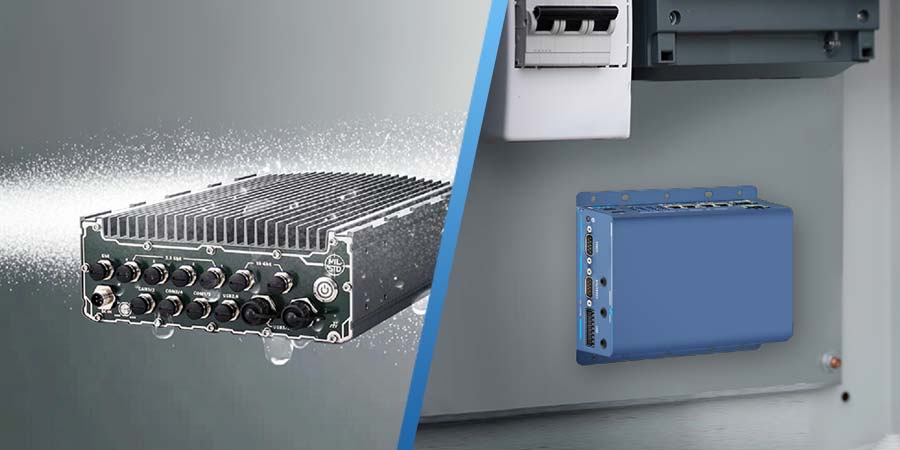
In many industrial settings, airborne dust and particles are inevitable. From factory floors and metal workshops to mining sites and construction zones, dust can infiltrate electronic systems, clog cooling fans, and cause heat buildup or electrical short circuits. Over time, these contaminants accelerate corrosion and reduce the lifespan of electronic components. For mission-critical operations, system failure due to dust is simply unacceptable and therefore, making dust protection a top priority when selecting or designing industrial computers.
Fully Dustproof PC Design
A dustproof PC is purpose-built to operate in harsh conditions without external protection. These systems feature sealed, fanless enclosures that eliminate air exchange between the interior and environment, preventing dust from entering. Compliance with IP (Ingress Protection) ratings, such as IP66, IP67, or IP69K, ensures full protection against fine dust and even high-pressure water jets.
Beyond sealing, materials also play a crucial role. Enclosures made from stainless steel or treated aluminum alloy resist corrosion caused by moisture and chemicals, while special surface coatings prevent degradation in washdown or humid conditions. Combined with compliance to MIL-STD-810H for shock and vibration, dustproof PCs are engineered to ensure continuous operation in the toughest industrial environments with minimal maintenance and long service life.
Using a PC Inside a Waterproof Cabinet
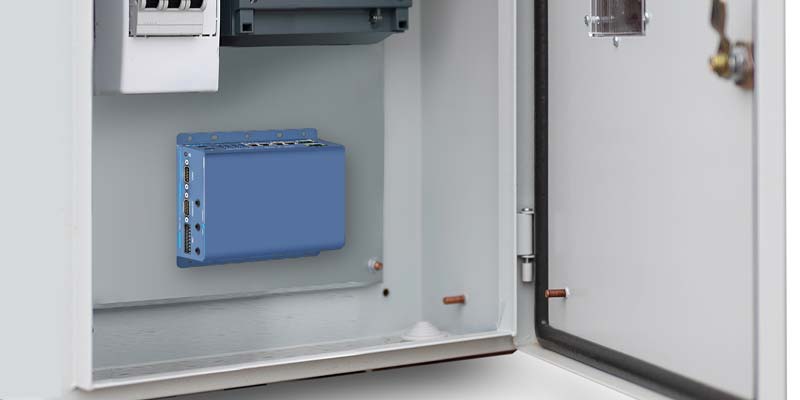
An alternative approach is to install a regular industrial PC inside a waterproof or dustproof cabinet. This solution isolates the computer from the environment while still allowing the use of higher-performance or modular systems. It is especially suitable when computing demands exceed what a fully sealed PC can offer, such as for AI inference, image processing, or large-scale data analytics.
However, thermal management becomes the key challenge inside a sealed enclosure. To prevent overheating, heat must be efficiently conducted out of the cabinet without relying on airflow. This has led to innovative flattop heatsink designs that transfer heat directly through contact with the cabinet surface, maintaining reliable performance even in closed systems.
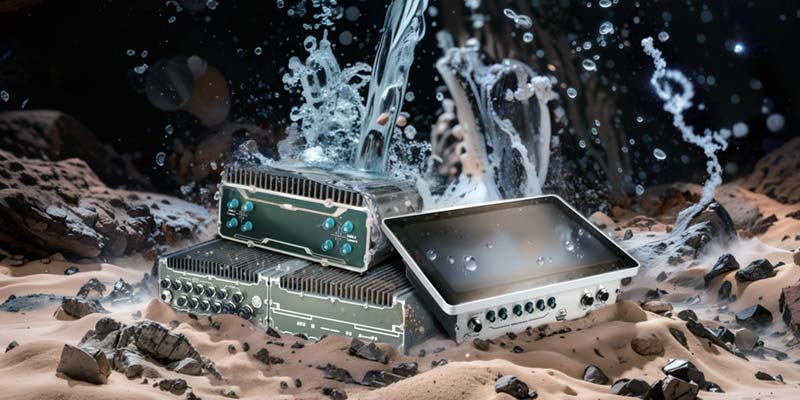
Both methods effectively protect computing systems from dust and contaminants, but they serve different needs.
- Dustproof PCs offer compact installation, simple deployment, and easy cleaning — ideal for environments such as food processing, mining, or outdoor automation.
- Cabinet-integrated solutions offer flexibility for high-power or expandable systems, often used in industrial automation cabinets or control stations where maintenance access is available.
Ultimately, the best choice depends on your requirements such as environmental conditions and installation preferences.
Whether you need a fully sealed dustproof PC or a cabinet-ready computing platform, both solutions ensure durability and reliability in dusty, humid, or corrosive environments. Neousys offers both, rugged IP66 to IP69K-rated dustproof PCs and flat-top heatsink edge AI computers designed for cabinet integration to empower industries to operate smarter and more reliably under any condition.