
HOME / Applications / Autonomous Buses Deployment on a Global Scale
Autonomous Buses Deployment on a Global Scale
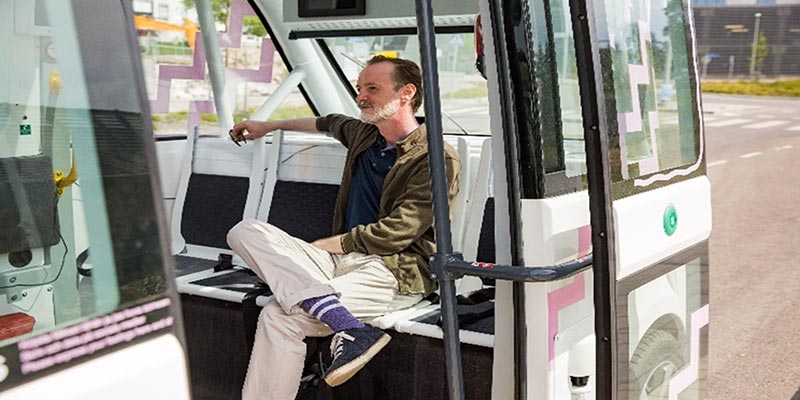
With the development of autonomous vehicles, the autonomous-driving technology is destined to expand to other forms of vehicles on the road. From the Technavio's research, the autonomous bus market size is forecast to increase by USD 2.29 billion, at a CAGR of 21.86% between 2023 and 2028.
Recently, projects to build electric buses such as in the UK, Alexander Dennis Inc. is building three autonomous e-buses for Connector project in Cambridge; Turkey’s Karsan’s e-Atak Autonomous bus receives the green light to operate in regular traffic in Norway; on the street of Korea's capital, Seoul, the SUM (Smart YoUr Mobility) autonomous buses glide through the streets turning corners and stopping at traffic lights all the while without driver intervention. Japan is also experimenting the possibilities of Level 4 autonomous buses when Osaka hosts the 2025 World Exposition. The autonomous driving buses can also be seen in Beijing, Hangzhou, and mountain city Chongqing, China.
Judging by United States' National Highway Traffic Safety Administration (NHTSA) definitions, these autonomous buses are the equivalent of a level 2 to level 4 autonomous system. The system is able to function during day, night and in overcast weather conditions.
How do Autonomous System Work?
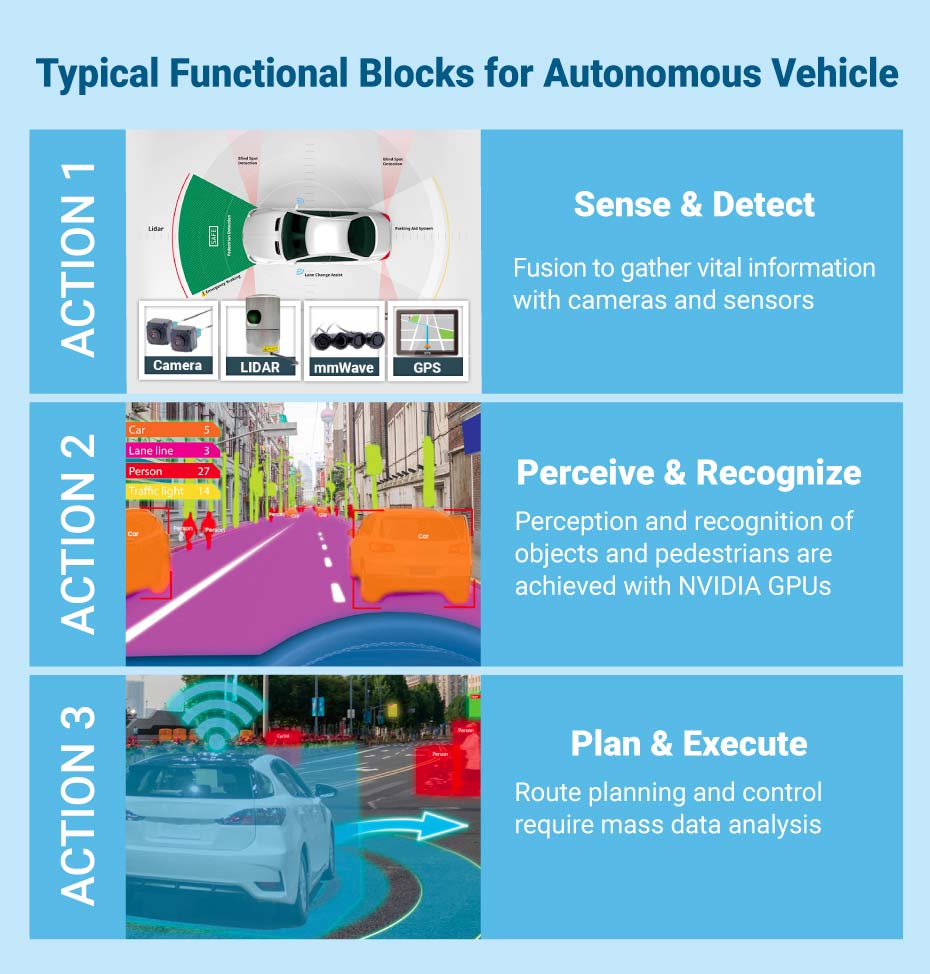
1.Sense & Detect:
- Collect Data from sensors, cameras, Lidars, mmWave radar, GPS/ IMU
- Combine and synchronize data from disparate sensors
- Concert sensor data into proper presentation for later sensor fusion
2. Perceive & Recognize:
- Perceive surrounding objects using deep-learning models by object detection, tracking and vehicle behavior estimation.
- Identify vehicle's location with high level of accuracy using GPS/ IMU data and running Simultaneous Localization and Mapping (SLAM) using camera or LIDAR data
3. Plan & Execute:
- Path planning to navigate from point A to B by identifying static obstacles, road constrains and dynamic obstacles via V2X communications
- Motion planning by maneuvering the vehicle according to localization info, HD map, and perception info to generate rule-based control output.
Neousys rugged edge HPC server is powered by AMD® EPYC™ 7003 “MILAN” series CPU with up to 64 cores/ 128 threads, and NVIDIA® RTX A6000/ A4500 inference accelerator. Featuring uniquely partitioned compartments for the CPU, GPU, and add-on cards to optimize airflow, it is one of the first HPCs capable of being deployed at the edge and perform reliably as a central controller to sense/ detect, perceive/ recognize, plan/execute in autnomous situations. With 10G Ethernet, PoE+ and USB 3.1 ports to connect to sensors and Lidars, it enables the vehicle to perceive objects and react to the surrounding environment with deep learning algorithms. The 2U 19'' enclosure is only 350mm deep are perfect for autonomous vehicle applications.
With more and more cities deploying autonomous buses, it reflects the rising expectations for AI technology as a way to address the driver fatigue or shortage, and other reasons. Embracing this transformative technology will pave the way for a future where public transportation systems are not only efficient and convenient but also environmentally friendly and sustainable.