
HOME / Applications / AI Aids Recycling Efforts
AI Aids Recycling Efforts
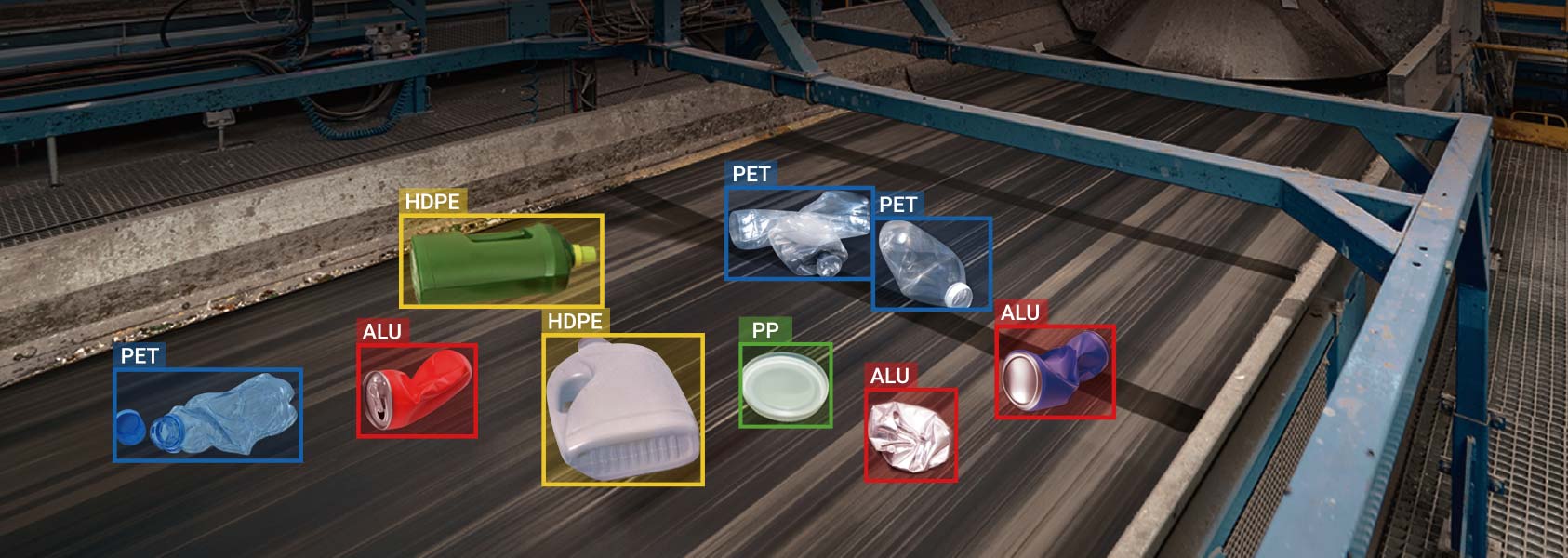
In the wake of climate change and the market's swiftly evolving demands, and sustainability, secondary raw materials have become vital for the recycling industry. With one of the global renowned brands leading the way, Coca-Cola Canada has successfully transitioned to 100% recycled secondary raw material for its 500ml bottles.
The waste management industry is witnessing a transformative shift from strategies into action with the integration of AI technology. At the forefront of this revolution are advanced automated waste sorting systems that are revolutionizing the recycling process.
"What is AI-powered automated waste sorting system?
AI-powered sorting systems offer advanced computer vision, machine learning, and robotics technologies to transform waste into valuable secondary resources. Vision-based sorting technology that recover plastics, metals, paper, organics, e-waste and other valuable materials discarded in single waste stream recycling or mixed waste sorting.
However, deploying an AI system in such instances face many challenges such as the use of conveyor belt resulting in constant vibration; the heat generated means the system must endure hotter than usual ambient temperatures; recycling glass or plastic drink bottles may contain residue or fluids that can pose as threats; and if the processing line is outdoors, it may be subject to the outdoor weather conditions.
Therefore, the AI computer system must offer inference/ deep learning capability, connectivity for machine vision, ruggedness to withstand environmental conditions.
Neousys GPU computers support up to dual NVIDIA® 350W GPU cards to enable AI machine vision capabilities. With patented thermal solution and damping bracket technology that can withstand up to 3Grms shock/ vibration resistance, and offer reliable operation in critical tasks.
Without a doubt, AI is transforming waste management through automated sorting systems utilizing robots and machine learning for accurate and rapid waste categorization, route optimization through data analysis for efficient collection, and data-driven decision-making with predictive analytics for effective resource planning and strategy.